Sustainable progress in disaster risk management (DRM) and resilience requires practitioners—including policymakers and disaster management agency officials—to have the knowledge and experience necessary to influence policies and spread good practices. Without learning and capacity development in this area, initiatives aimed at reducing a country’s vulnerability to natural hazards may result in short-term gains, but will not effectively change longer-term outcomes.
Through the World Bank Group (WBG) Academy, GFDRR empowers government leaders, civil society, private sector, and development professionals with the skills and tools to drive real-world resilience impact across the facility's thematic areas and cross-cutting areas. GFDRR support through the WBG Academy focuses on Practitioner Academy Programs which provide targeted knowledge exchange and learning for government officials, private sector actors, implementing agencies, and partner organizations across urban development, DRM, and land management. Designed to build both technical skills and collaborative capacity, the programs combine peer learning, operational and technical support, and practical implementation to address client-specific challenges, scale policies and solutions, and drive institutional change. Each program contributes to capacity building, knowledge sharing, technical innovation, and operational integration.

Highlights
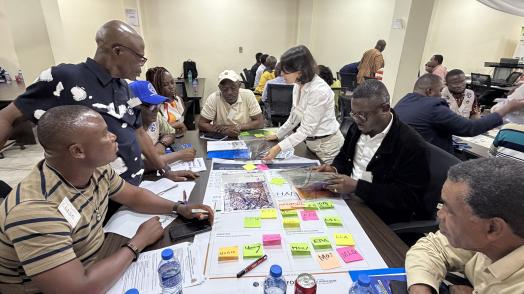
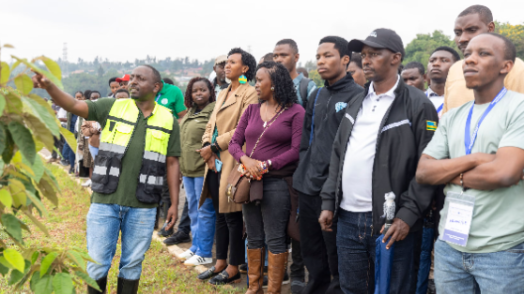
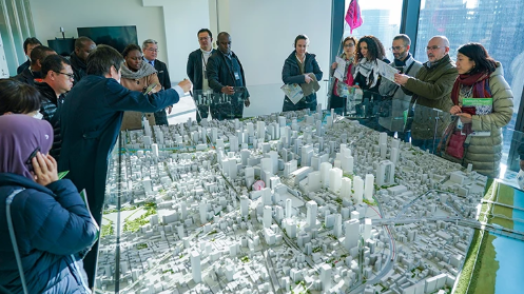
GFDRR supports Practitioner Academy Programs which provide targeted knowledge exchange and learning for government officials, private sector actors, implementing agencies, and partner organizations across urban development, DRM, and land management. Designed to build both technical skills and collaborative capacity, the programs combine peer learning, operational and technical support, and practical implementation to address client-specific challenges, scale policies and solutions, and drive institutional change. Each program contributes to capacity building, knowledge sharing, technical innovation, and operational integration.
Highlights include:
GFDRR, through the City Resilience Program (CRP), organizes the Livable Cities Academy, a workshop series where participating cities benefit from a diverse range of technical expertise to strengthen their ability to understand and analyze urban risk, with an eye toward driving and informing the prioritization and design of resilience investments anchored on World Bank Group (WBG) operations. A key feature of the workshop series is the hands-on training on the City Scan, which combines large amounts of spatial and socio-economic information to enable city-level decision-makers and development partners to engage in dialogue about natural hazards and disaster risks in key sectors and geographic areas which need to be addressed through coordinated investments.
Nature-Based Solutions Training Program
The Nature-Based Solutions (NBS) Training Program equips practitioners with approaches, tools, and hands-on knowledge to integrate NBS into development planning and climate resilience strategies for World Bank-financed projects. It supports task teams, governments, and public institutions to turn NBS ambition into practical, bankable climate resilience investments for World Bank-supported development operations. Working with ministries, infrastructure agencies, water authorities, and planning departments, the program helps translate concepts into implementable World Bank-financed projects.
Tokyo Development Learning Center Technical Deep Dives
The Tokyo Development Learning Center (TDLC), a collaboration between the World Bank and the Government of Japan, was launched in 2004 and has since become a key global knowledge-sharing platform. TDLC leverages both Japanese and international expertise to enhance the impact of urban development projects worldwide. Its flagship offering, the Technical Deep Dive (TDD) workshops, are week-long immersive programs designed to bring together participants from developing countries and their World Bank teams. These workshops include expert presentations, site visits, group discussions, and action planning sessions aimed at generating actionable solutions for urban development.

Watch recordings of WBG Academy webinars in the GFDRR YouTube channel.