
The following is a summary of the first session of the Technical Workshop on Risk-Informed Urban Planning in Liberia hosted on June 17 to 19, 2026 by the government of Liberia and the World Bank, with financial support from GFDRR’s City Resilience Program.
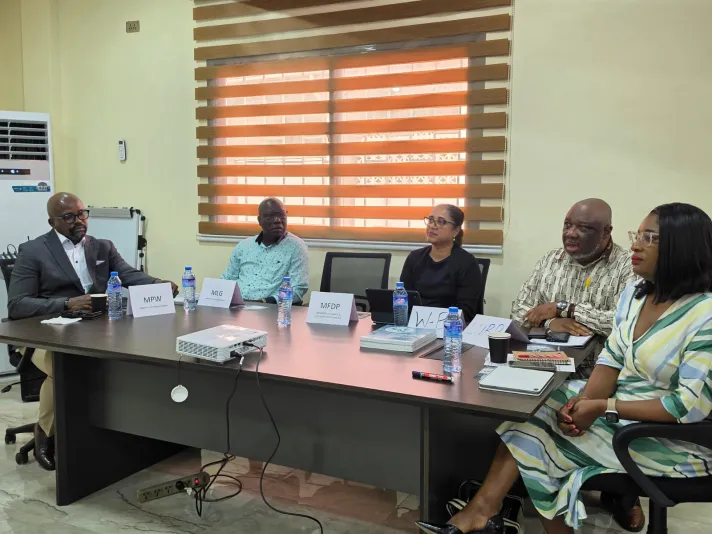
The technical workshop focused on equipping participating institutions with the practical approaches and risk-sensitive tools necessary to strengthen urban planning and development across Liberia. As rapid urbanization unfolds, the country faces a critical window to reshape its urban trajectory. Day 1 established the shared conceptual and institutional foundations for risk-informed planning, prioritizing governance structures, legal frameworks, and stakeholder roles. The event convened Ministers, high-level officials, mayors, and technical teams from Monrovia, Paynesville, Ganta, Gbarnga, and Buchanan to confront a shared challenge: moving from policy frameworks to practical implementation. Deliberations highlighted the urgent need to bridge the gap between vision and action—translating zoning, risk data, and planning tools into daily municipal decisions for resilient growth. Ultimately, a defining message emerged: urban planning is not merely about designing the future, but enabling the systems, institutions, and people to deliver it.
"As a result of the effect that we all know of climate change, we must establish urban cities that are resilient enough to withstand those devastations that may come along the way,” - Mr. Roland Layfette Giddings, Minister from Ministry of Public Works, Liberia
Key Insights
A Window of Opportunity: Better Decisions, Starting Now
Liberia’s urban future is being shaped today. As Ana Campos García, Lead Disaster Risk Management Specialist highlighted, rapidly expanding cities mean current decisions will determine growth patterns, risk exposure, and opportunity for decades to come. More than half of the country’s population is already urban, while settlement extent in high flood-risk areas increased by 107% between 1985 and 2015. Urban planning is fundamentally about choices: where growth should occur, where it should be avoided, what infrastructure is needed, and how development can support long-term social, economic, and environmental goals. Integrating hazard, exposure, and vulnerability information into these choices can prevent new risks, protect people and investments, and foster livable and resilient cities. The presentation introduced the Restrict–Condition–Promote framework proposed in the Handbook for Livable and Resilient Cities as a practical basis for directing growth toward safer locations and translating risk information into zoning, development controls, infrastructure and investment decisions.
“Planning is a marathon, not a sprint. Like a marathon, success comes from setting a direction, taking consistent steps, and staying the course through challenges.” - Ana Campos, Lead Disaster Risk Management Specialist, GFDRR, World Bank
The Challenges and Opportunities: From Policy to Practice
The participation of line ministries and national authorities—spanning planning, finance, local governance, disaster management, environment, and land—alongside municipal leadership, was central to navigating the new Zoning Act. An Environmental Protection Agency representative emphasized: “The Zoning Law is an important tool to guide development, reduce disaster risk, and build resilience.” Nationally, local officials identified critical implementation gaps, noting that “cities are growing ahead of the plan without necessary data, tools, or equipment,” compounded by informal growth and fragmented coordination. Mayors specifically highlighted escalating flood risks driven by wetland encroachment. However, deliberations also unveiled strategic opportunities. The zoning framework provides a foundation for coordinated action, stronger institutional collaboration, and risk-informed planning driven by local knowledge, community participation, and incremental enhancements where data and technical capacity remain limited.
From Mapping to Action: Municipal Solutions for Complex Urban Governance
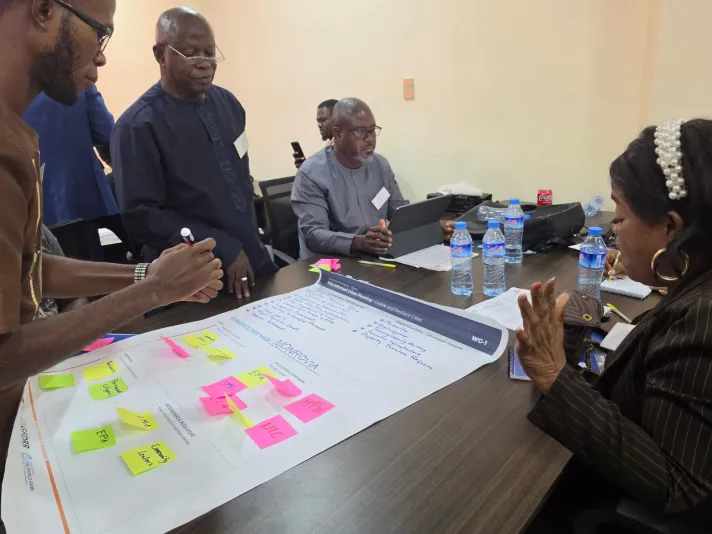
Day 1 transitioned from concepts to practice through hands-on exercise with city teams. Mayors and technical staff from Monrovia, Paynesville, Ganta, Gbarnga, and Buchanan collaborated to identify priority challenges, opportunities, and key stakeholders for spatial plan implementation, addressing a core question: What are the main bottlenecks shaping urban growth—and what opportunities exist to address them?
Across all five municipalities, participants highlighted shared challenges, including informal expansion, environmental degradation, infrastructure deficits, and institutional coordination constraints. Building on this, teams developed stakeholder maps to analyze who influences decisions, enables implementation, and is affected by planning outcomes. This process underscored the complexity of urban governance. By identifying strategic partners, grassroots actors, and institutional gatekeepers, cities moved beyond diagnosing vulnerabilities to defining practical, coordinated actions for community engagement and regulatory enforcement.
Lessons Learned and Next Steps
Day 1 highlighted that while Liberia has a strong foundation for risk-informed planning, success depends on implementation. Four priorities emerged: 1) Strengthening institutional governance; 2) Operationalizing the Zoning Act; 3) Building municipal capacity; and 4) Expanding citizen engagement. Through the group exercise, cities successfully mapped stakeholders and action pathways. Moving forward will include translating these insights into practice and shifting challenges to implementing solutions. Ultimately, the session proved that risk-informed planning is not just about risk reduction, but about equipping Liberian municipalities to regulate and drive resilient growth.