The following is a summary of a session at the Emergency Preparedness & Response (EP&R) Learning Academy, which was hosted on April 20 to 24, 2026 by the World Bank Tokyo Disaster Risk Management (DRM) Hub, in partnership with GFDRR, and with financial support from the Government of Japan and the Government of Canada.
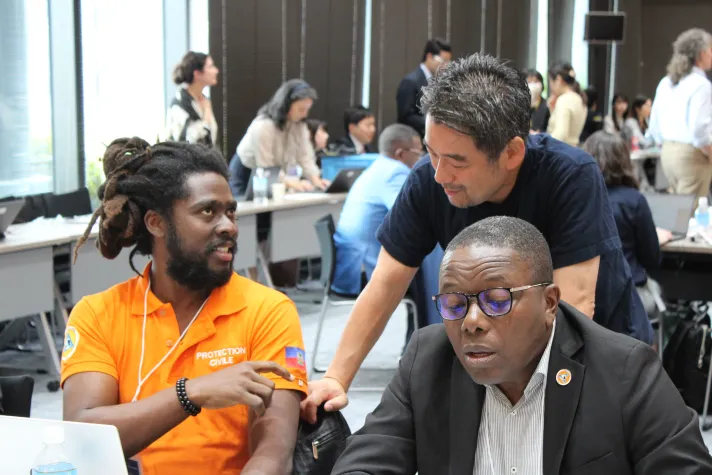
This session titled "Dialogue and Simulations on Emergency Response" examined the institutional and operational architecture of disaster preparedness and response through the lens of Japan's nationally codified emergency management framework. Led by Associate Professor Muneyoshi Numada of Disaster Management Training Center (DMTC) at the University of Tokyo, participants were introduced to a comprehensive taxonomy of 47 disaster management tasks spanning 8 operational fields, from governance and information communication to rescue, evacuation, and infrastructure recovery. Building on this framework, participants engaged in multi-hazard group simulations, applying the 47 functions to real-life hazard scenarios.
Key Insights
Clear mandates to specific actors strengthened Japan's EP&R framework
Associate Professor Muneyoshi Numada stressed the importance of structured, legally grounded emergency response frameworks that assign clear mandates to specific actors across all phases of disaster management. Drawing on Japan's experience, including the 1995 Great Hanshin Earthquake, where over 70% of survivors were rescued by community members rather than professional responders, he highlighted that no single agency can bear the full burden of response. This was reflected in Japan's framework, which explicitly distributes responsibilities across national ministries, local governments, the private sector, NGOs, and community groups, and codifies these roles through legislation, business continuity plans (BCPs), and interoperability protocols such as the Disaster Medical Assistance Team (DMAT) system.
Institutional mandates across countries often lacking, even if response capacity exists
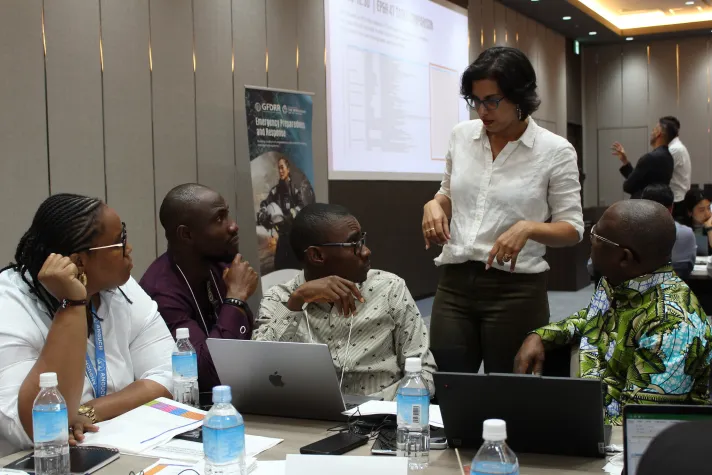
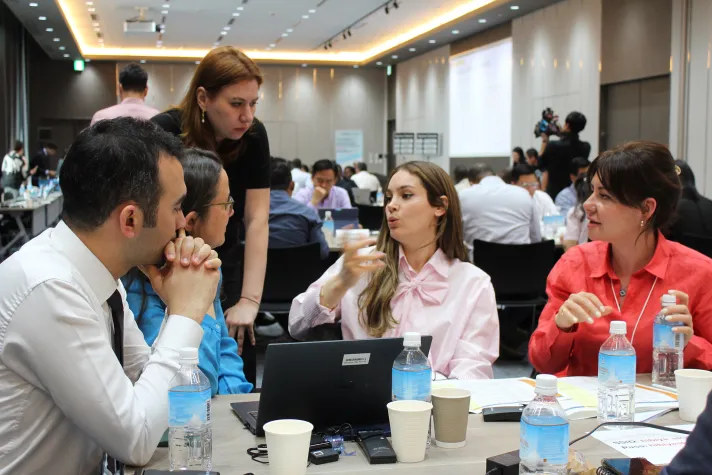
During the group simulation exercises, delegates from multiple countries applied the 47-function framework to their own national contexts, mapping which ministry or agency holds responsibility for each task and whether a legal mandate or policy instrument exists to support it. This exercise surfaced significant gaps particularly in areas such as shelter management, damage certification, disaster waste management, and coordination with vulnerable populations in aged or inclusive-care facilities. Afterwards, teams engaged in live-action scenario planning, drawing on real-life hazard situations. The discussions that followed revealed that while many countries have response capacity, institutional mandates are often fragmented, overlapping, or absent for critical functions, underscoring the value of systematic gap analysis as a preparedness planning tool.
Lessons Learned and Next Steps
A key lesson is that the simulation methodology, grounded in Japan's decades of disaster experience, can be transferable across country contexts. Participants also stressed the importance of being equipped with a practical analytical tool to structure national action plans, engage line ministries in mandated preparedness roles, and build the case for legislative or policy reform where gaps exist. Looking ahead, participants are now expected to apply a rigorous, field-tested taxonomy of emergency functions to their own national systems, identifying institutional gaps and legislative blind spots that may not be visible through conventional planning processes.
Related Resources