The following is a summary of a session at the Emergency Preparedness & Response (EP&R) Learning Academy, which was hosted on April 20 to 24, 2026 by the World Bank Tokyo Disaster Risk Management (DRM) Hub, in partnership with GFDRR, and with financial support from the Government of Japan and the Government of Canada.
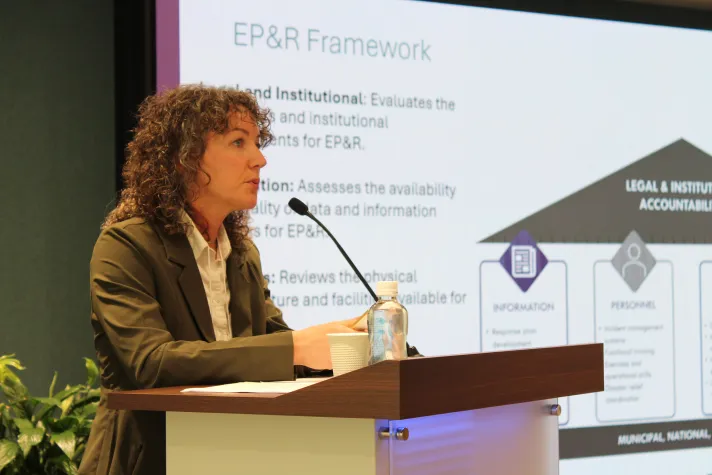
The session titled "Baseline Baseline Assessments and Action Plan - Country Examples" positioned assessments as practical decision‑making tools to diagnose emergency preparedness and response (EPR) systems and guide policy, investment, and capacity‑building decisions. The session emphasized understanding system functionality across legal frameworks, institutions, financing, facilities, personnel, and information systems. Participants reviewed different World Bank assessment tools, ranging from rapid 90‑question diagnostics to comprehensive “Ready to Respond” assessments, and discussed why simulations are also essential to validate findings. Aggregate results across countries showed strong legal and institutional foundations but persistent weaknesses in facilities, infrastructure, and financial preparedness. Country experiences demonstrated how baseline assessments help shift discussions from assumptions to evidence, enable prioritization, and support engagement with Ministries of Finance and development partners. Overall, assessments were framed as a starting point for iterative improvement, not a one‑off exercise.
Key Insights
Baseline assessments reveal that implementation, not laws, is the main constraint
Based on rapid assessments undertaken ahead of the EP&R Academy, an analysis aggregating results across countries showed relatively strong legal and institutional frameworks but weak operational performance. The session therefore highlighted that moving from written mandates to effective implementation is non‑linear and significantly harder than passing laws. For example, Cambodia’s assessment confirmed the existence of solid legislation but exposed gaps in resourcing, coordination, and execution. This evidence directly informed new initiatives, including a social protection framework, a crisis emergency response fund, and an early warning roadmap. Similarly, Nigeria’s state-level assessment showed that response systems existed but were fragmented; the assessment helped reframe internal discussions toward functional gaps rather than institutional blame. Thus, countries should prioritize investments that translate legal authority into operational capacity, such as facilities, equipment, protocols, and training, rather than focusing primarily on additional legislation.
"A strong law without a functional facility is just a promise we can't keep. We must align our physical assets with our institutional goals." - Mr. So Socheath, Project Management Unit Manager, National Committee for Disaster Management, Cambodia
Simulations are critical to stress‑test assessment findings
The session stressed that baseline assessments alone cannot capture how systems perform under real pressure. Pairing assessments with simulations exposes coordination failures, unclear roles, delayed financing flows, and procedural bottlenecks that are invisible on paper. Participants noted that disaster response systems often appear adequate during desk reviews but fail during simulations due to unclear emergency activation thresholds, weak inter‑agency coordination, or lack of surge staffing arrangements. In Nigeria’s case, simulations helped reveal weak operational readiness and insufficient joint practice among institutions, reinforcing findings from the baseline assessment, especially in FCV contexts. Thus, countries are encouraged to use rapid assessments and simulations together—especially when time or resources do not allow for full diagnostics—to quickly identify high‑impact gaps and prioritize corrective actions.
“When countries vulnerable to multiple hazards and fragility, conflict, and violence (FCV) lack a clear picture of their own readiness, they are condemned to repeat the same crisis response — over and over again. Baseline assessments and simulations are the critical first step in shifting countries from reacting to crises toward anticipating and preventing them.” - Dr. Evans Ugoh Ignatius Ph.D (Deputy Director, National Emergency Management Agency (NEMA) Nigeria).
Lessons Learned and Next Steps
Key lessons learned include 1) Exact scores from baseline assessments (rapid preparedness assessments, R2R, etc.) matter less than identifying priority gaps, trends and potential investments; 2) Financial preparedness, facilities, and infrastructure remain common weaknesses; and 3) Self‑assessments should be complemented by simulations and partner validation.
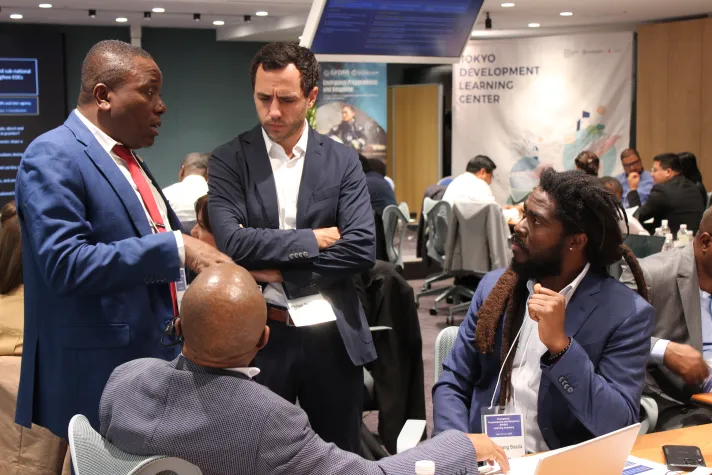
Delegations will use their baseline findings, simulations, and peer learning from the academy to develop practical, prioritized country action plans by the end of EP&R Academy, focusing on feasible short‑ and medium‑term reforms and investments. Follow-up will be done also prior to the Academy to ensure sustainability of learnings.