Over the past two decades, disasters have caused North Macedonia significant damage and losses, with estimated economic costs cumulated to over $667 million. Major seismic, flood, and wildfire events have already led to devastating human, economic, and social impacts, and climate hazards are projected to further intensify. Even under a moderate climate scenario, experts warn that economic damages will wipe out at least 4% of GDP by 2050, and that is a conservative baseline. The country's critical infrastructure, including schools, fire stations, and Protection and Rescue Directorate (PRD) offices, is dangerously exposed: the entire national portfolio of assets (532) is located in medium-to-high seismic zones, with 44% in high hazard zones. Of those, 84% are exposed to medium to high wildfire hazards and 35% are in flood hazard zone, highlighting the complex, compound and cascading risks in the country.
Nevertheless, important gaps remain in North Macedonia’s ability to manage disaster risks effectively. These include challenges in risk-informed planning, coordination, and investments in resilience, which can increase the impacts and costs of disasters. The country has already developed draft policy, tools, and strategic guidance to strengthen resilience. The next step is to put them into practice through coordinated implementation, targeted investments, and stronger collaboration across institutions.
To help North Macedonia shift from reactive crisis management to proactive risk reduction and investment planning, the World Bank Group, funded by the European Union (EU) through the Technical Assistance Financing Facility for Disaster Prevention and Preparedness (TAFF), has released a series of three technical reports under the "Preparing for Futures" project. These publications provide a clear, evidence-based roadmap for prioritizing resilience investments, strengthening institutional capacities, and protecting vulnerable communities.
Key Findings and Recommendations
Critical infrastructure is at high risk, highlighting the need for targeted resilience investments: Of the 277 assets further analyzed (schools, fire stations, and emergency response offices), 137 are exposed to high seismic risk and require urgent upgrading. When climate projections and energy efficiency are also considered, 55% of all analyzed assets require integrated interventions—including 79 buildings classified as extremely high priority. While the evidence base, legal framework, and capacity for decision-making need further strengthening, existing risk-informed analytics can already guide prioritization in resilience investments, focusing on high-risk facilities and hotspot areas.
High concentration of vulnerability in hotspot municipalities: The assessment reveals that 40% of municipalities (32 of 80) have populations with high to very high disaster vulnerability due to multiple socio-economic, environmental, climate, socio-economic and environmental risks, alongside limited disaster preparedness and recovery capacity. Higher levels of vulnerability are evident among marginalized and disadvantaged population groups, including people without income, unemployed people, people with disabilities, single-mother households and residents with limited education or inadequate access to basic services.
Immediate actions needed to shift from reactive to resilient and risk-informed disaster management: To improve risk and hazard assessments in North Macedonia, it is crucial for the country to enhance institutional coordination, technical methodology, and data integration needed to meet EU standards. Meanwhile, a comprehensive framework for resilient recovery is needed for a shift from reactive, ad-hoc reconstruction toward a strategic, risk-informed system that restores services quickly and reduces future losses.
DOWNLOAD THE REPORTS
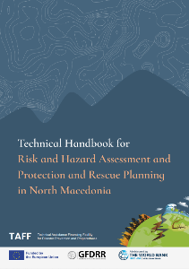
Technical Handbook for Risk and Hazard Assessment and Protection and Rescue Planning: Standardizes methodologies and data integration for national and local hazard mapping. It aligns civil protection workflows with EU standards to ensure inter-institutional coordination during complex, cascading disaster events.
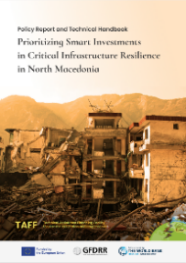
Prioritizing Smart Investments in Critical Infrastructure Resilience: A Policy Report and Technical Handbook: Introduces a quantitative decision-support tool to prioritize capital investments in infrastructure resilience. It provides a dual-retrofit methodology combining structural seismic strengthening with energy-efficiency upgrades to maximize the impact of resilience investments.
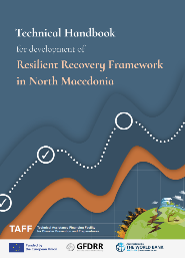
Technical Handbook for Development of Resilient Recovery Framework: Establishes an operational framework to transition from ad-hoc emergency rebuilding to institutionalized pre-disaster planning. It outlines recovery financing mechanisms, governance roles, and transparent protocols to ensure communities "build back better" quickly.
These reports form part of technical assistance under the Technical Assistance Financing Facility (TAFF), financed by the European Commission—Directorate-General for European Civil Protection and Humanitarian Aid Operations—and implemented by the World Bank Group and the Global Facility for Disaster Reduction and Recovery (GFDRR). This technical assistance is delivered in partnership with the Protection and Rescue Directorate of North Macedonia as part of the 2024 TAFF allocation for country-specific activities, under the title “Resilience Investments, Governance and Recovery for Disaster Risk Reduction”.