Natural Hazard Risk
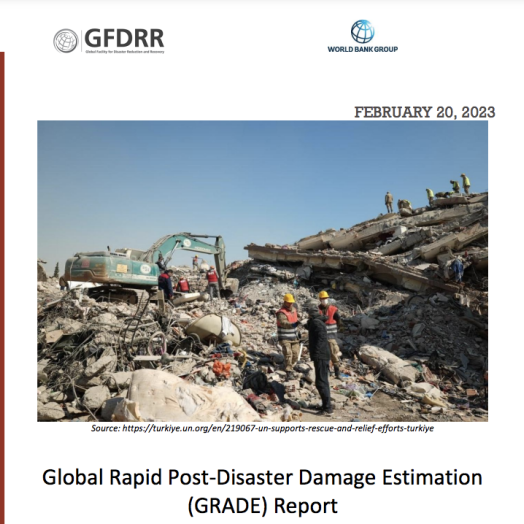
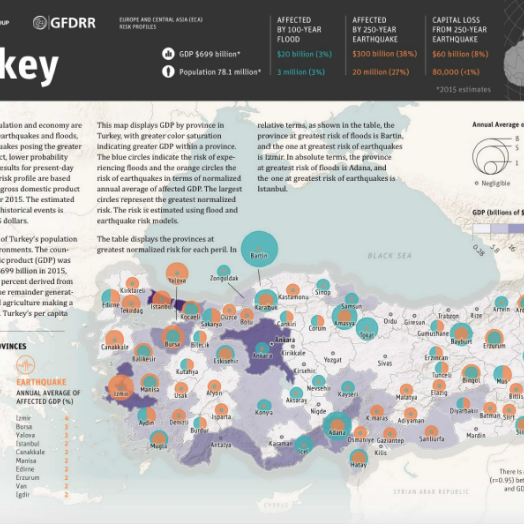
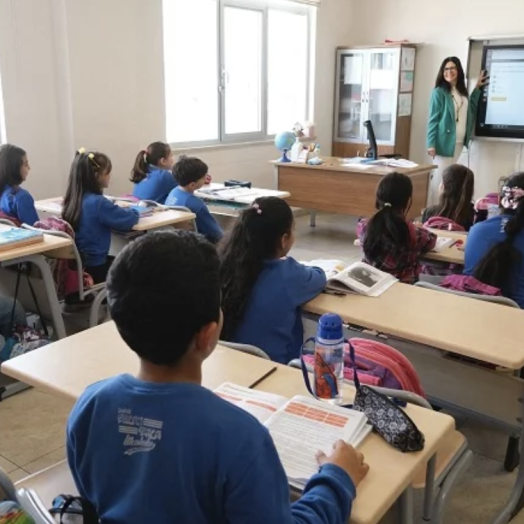
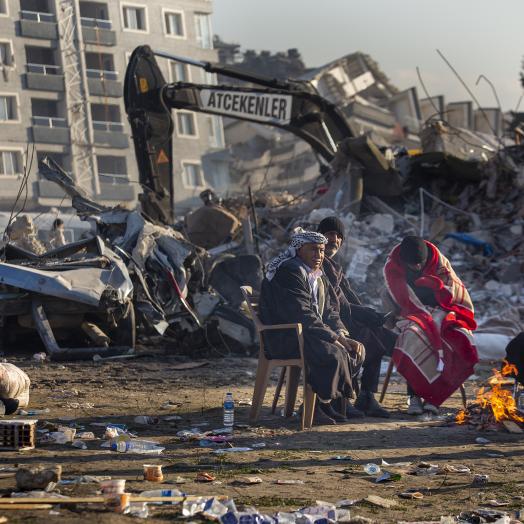
Turkey is vulnerable to many natural hazards, including earthquakes, landslides, and floods. The 7.1 magnitude Marmara Earthquake in 1999 resulted in over 18,000 deaths and estimated losses of over $28 billion. The country’s largest city, Istanbul, is located on the North Anatolian Fault and thus highly prone to earthquakes. It is estimated 33 percent of schools in the country are potentially seismically vulnerable.
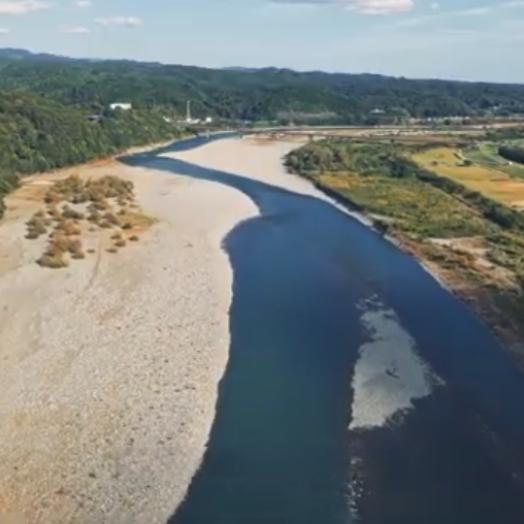
Although less documented, floods and landslides occur frequently and cause significant localized losses. According to GFDRR-supported analysis, an extremely high-impact flood could affect 3 million people and cause capital losses equal to 3 percent of gross domestic product. The floods in 2006 and 2009, when combined, totaled almost $1 trillion in damage. Since 2014, severe flooding has occurred in Ankara, Artvin, Izmir, and Mersin. In 2016, the Cukurova region suffered the third heavy rainfall in 50 years. This led to urban flooding, blocked access roads to the port, and shut down port operations.
In the last five years, Turkey has become one of the world’s largest refugee-hosting countries, with a rapidly changing population distribution along the Dead Sea Rift and East Anatolian Fault zones. As of 2017, approximately 2.8 million Syrians under temporary protection have largely been integrated into cities, towns, and villages––stressing the infrastructure and increasing potential risk exposure.
Government Priorities
Turkey has advanced disaster risk management (DRM) through initiating reforms to better-manage and reduce disaster risk and strengthing institutions for more proactive DRM. To overcome institutional fragmentation, the government established the Disaster and Emergency Management Presidency (AFAD) in 2009. In 2015, the government adopted the Turkey National Disaster Response Plan to guide all disaster and emergency response.
Steps also have been taken to scale up risk-reduction investments in the provinces. For example, the Istanbul Seismic Risk Mitigation and Emergency Preparedness Project (ISMEP), with GFDRR support, enhances preparedness, strengthens critical infrastructure, and improves institutional and technical capacity for DRM and emergency response. In addition, the government has also stated a goal of improving seismic safety of all schools nationwide, which it is taking action on with GFDRR support.
To further advance the DRM agenda, the government’s priorities include:
- Substantially reducing the seismic risk of schools;
- Improving urban resilience in major cities and reducing risks to critical infrastructure;
- Building DRM capacity, particularly at the local level; and,
- Improving financial protection and budget resources.
GFDRR initially partnered with the World Bank to supported post-disaster reconstruction and recovery following the 1999 earthquake. Since 2008, GFDRR has significantly increased support and emphasized risk reduction, institutional strengthening, and post-disaster response. This work was in partnership with the World Bank, which funded over $750 million in emergency recovery and reconstruction projects. Activities have provided a platform for the government’s shift toward risk mitigation and emergency preparedness.
To improve resilience, the Governorship of Istanbul, with support from GFDRR, launched ISMEP, a comprehensive program to help the city prepare for and respond to earthquakes. This $400 million project, funded by the World Bank, pioneered an innovative approach of combining investments to reduce the vulnerability of critical public infrastructure and enhance emergency response with broad public risk-awareness campaigns.
Currently, GFDRR is supporting the advancement of DRM across core government priorities. This includes activities to improve the safety of school children and to help the government build on ISMEP to programmatically strengthen its national school building stock. This support is aligned with a planned World Bank-funded $300 million National Disaster Risk Management Project, envisaged to kick-off in FY19.
Pilot activities are also supporting the Turkish private sector to improve its business continuity planning in specific sectors through risk assessments of critical infrastructure and lifeline utilities and by developing respective mitigation measures.
GFDRR anticipates continued demand from the Government of Turkey to support:
- Scaling up the safer schools agenda through construction, retrofitting, or repurposing of disaster-resilient education facilities;
- Improving business continuity planning;
- Building an analytical foundation to inform disaster- and climate-risk decision-making across sectors;
- Supporting operationalization of the National Disaster Response Plan and National Disaster Risk Reduction Plan; and,
- Enhancing urban resilience and adaptation capacity to manage seismic and climate-related risks.