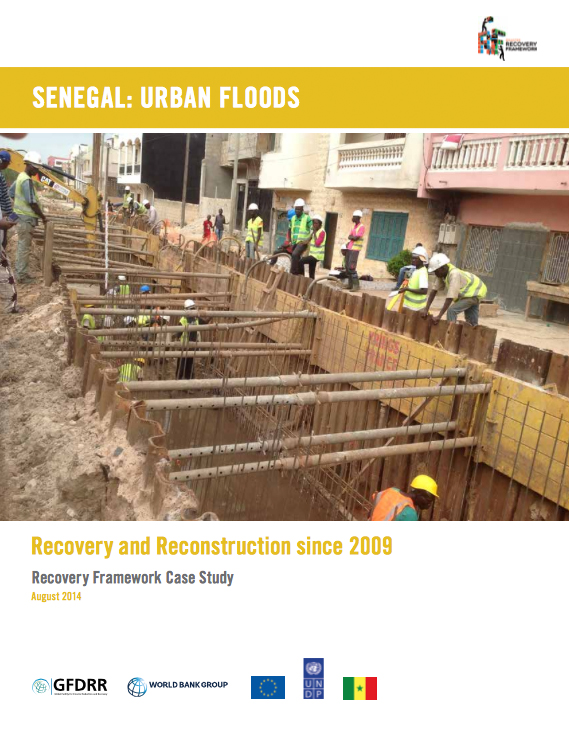
Senegal is located in the Sahel region of West Africa. Between 1970 and 2000, the country suffered prolonged droughts that contributed to rural exodus. Today, almost half of Senegal’s population lives in urban areas; over 76 percent of these areas are classified as unplanned settlements. The capital of the country, Dakar, occupies only 0.3 percent of the territory of Senegal (2011)1 yet concentrates 21 percent of the country’s population, as well as most public services and economic activity2 . Communities in these peri-urban areas—already among the poorest in the country—are the most vulnerable to episodes of heavy rainfall and subsequent flooding. The impact of floods in this situation of uncontrolled urban growth is exacerbated by the lack of a functional storm water drainage system, ineffective land-use policies and non-compliance with the urban planning and development master plan. The negative impact of flooding during the first decade of this century, especially those of 2005, 2009 and 2012, continue to be reflected in existing socio-economic conditions. Aside from the tragic loss of human lives, infrastructure—roads, bridges, houses and other property—was destroyed. The agricultural sector has also suffered from destruction of irrigation networks and loss of crops.3 Between 2008 and 2012, the Government of Senegal invested over 70 billion FCFA, excluding external support, to reduce urban flooding but without satisfactory results.

Senegal's Recovery from Urban Floods: Case Study
April 17, 2017