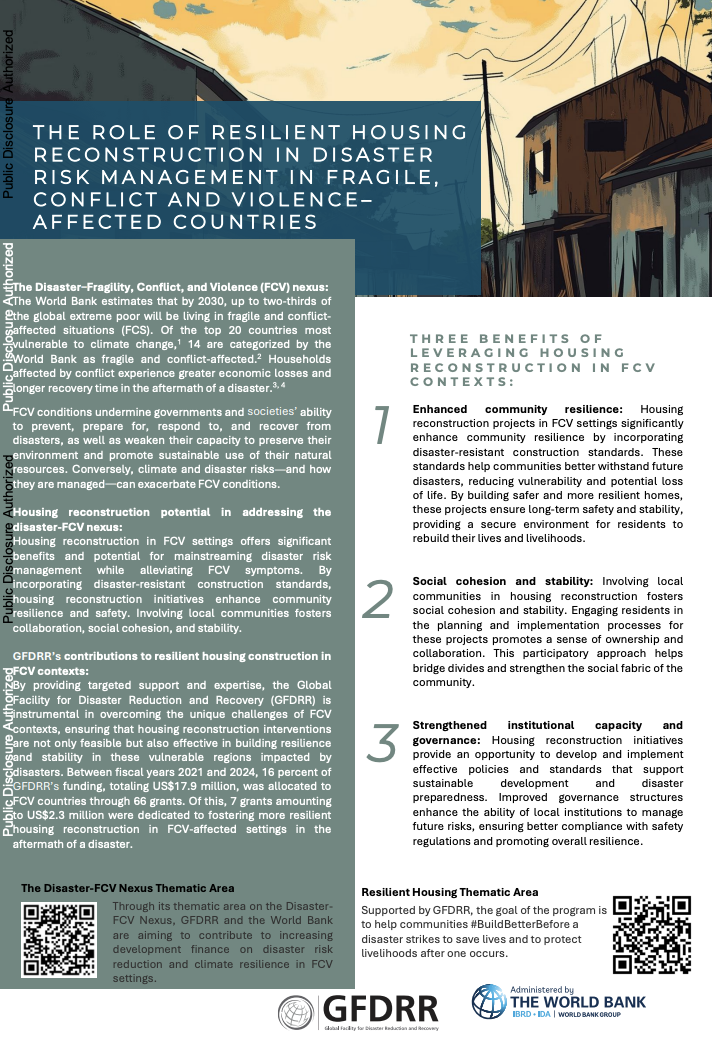
This factsheet outlines the critical role of resilient housing reconstruction in disaster risk management within Fragile, Conflict, and Violence (FCV) contexts. It frames the Disaster–FCV nexus, where climate vulnerability and conflict intersect to exacerbate poverty and impede recovery, and draws on World Bank portfolio data and case studies from Lebanon and Sri Lanka. The document identifies three core benefits of housing reconstruction: stronger resilience through disaster‑resistant standards, improved social cohesion via inclusive community participation, and enhanced institutional capacity and governance. It also highlights key operational challenges, such as institutional fragility, limited access to skilled labor and materials, and social fragmentation, and recommends leveraging existing programs, conducting localized needs diagnostics, ensuring community engagement, and using preapproved, innovative solutions. From 1984–2023, the World Bank supported 10 housing reconstruction projects in 9 FCV countries, totaling 1.70 billion dollars and reconstructing 0.145 million units. The findings suggest that well‑designed housing reconstruction can accelerate physical recovery while fostering longer‑term stability and development. Limitations include context‑specific constraints and capacity gaps.

The Role of Resilient Housing Reconstruction in Disaster Risk Management in Fragile, Conflict, and Violence-Affected Countries
December 17, 2025