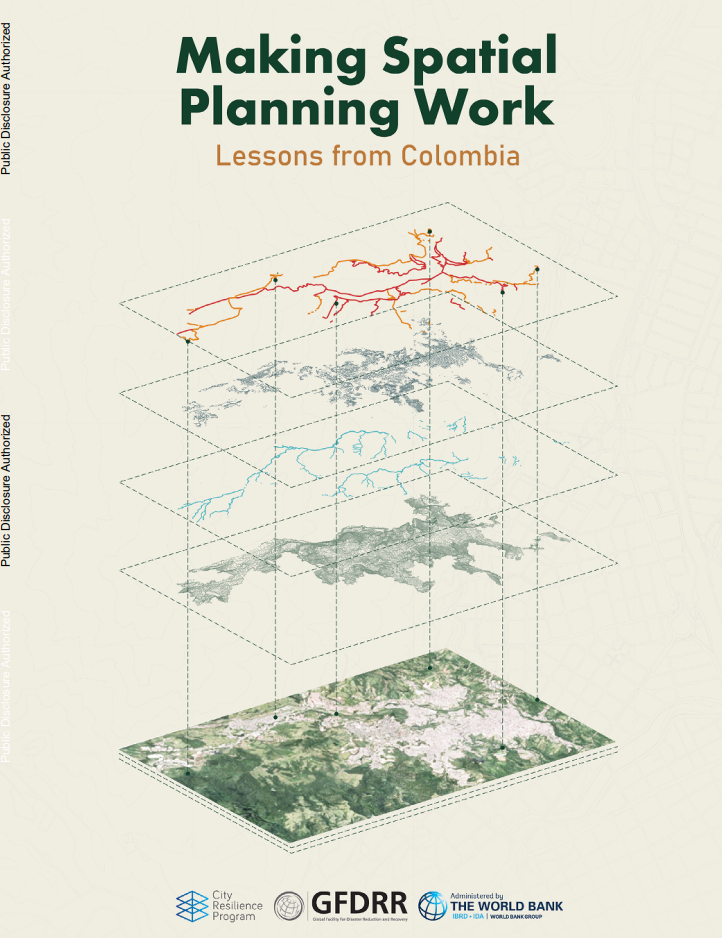
More than half of the world’s population now lives in cities, and urbanization is projected to continue at high rates in emerging economies, especially across Sub-Saharan Africa, South Asia, and Southeast Asia. The benefits of urban agglomeration, including productivity, proximity to services, and infrastructure efficiency, are well known. Yet unplanned urban growth poses important challenges, including socio-spatial segregation, uneven access to basic services, environmental degradation and disaster risk, job losses, and inefficient allocation of public funds. As a foundational tool that enables cities to navigate these pressures, spatial planning can provide the technical and financial roadmap needed to drive sustainable, resilient, and inclusive growth. Good spatial planning catalyzes dialogue among governments and diverse stakeholders, equipping cities to forge a shared territorial vision and to establish the mechanisms required to deliver on their goals. This report, Making Spatial Planning Work: Lessons from Colombia, offers national and subnational governments worldwide key insights to manage and strengthen their spatial planning systems while promoting a comprehensive, participatory approach. In Colombia, a country with an urban population estimated at 77 percent of the total, spatial planning was conceived in the 1991 Political Constitution as a right and a duty of municipal governments. This political and institutional commitment to spatial planning has paid off. Today, almost all Colombian municipalities have a Plan de Ordenamiento Territorial (POT), or Comprehensive Spatial Plan (CSP), that has been adopted and is now being implemented. What makes Colombia’s case remarkable is the coherence of its legislative, institutional, and operational frameworks, which have granted local governments autonomy to plan their territories. In addition, this autonomy is underpinned by the national government’s central role as the regulator of spatial planning processes, the shaper of planning policies, the creator of binding directives, and the provider of technical assistance to ensure the quality of subnational plans. The consolidation of a culture of spatial planning in the country has brought key direct benefits such as ecosystem conservation, disaster risk management and climate change adaptation, affordable housing development with the support of the private and community sectors, greater municipal revenues through land value capture instruments, and the mobilization of private capital for urban transformation and job creation Aimed at supporting decision-makers and technical officials at the national and subnational levels, this report is designed for countries and cities seeking to develop or enhance their local spatial planning frameworks and practices and maximize the considerable benefits such a transformation can produce. Through the example of Colombia and its cities, it illustrates how effective spatial planning can drive green, resilient, inclusive, and sustainable urban growth while fostering efficient public management, citizen participation, and private-sector engagement in territorial transformation.