
By Akiko Toya, Rodrigo Donoso, Roberto Tejada Ponce, and Julián Castro
La Paz has a long and complex history of disasters that have shaped the lives of its residents. In 2019, intense and prolonged rains triggered a massive landslide in Kantutani, destroying more than 150 homes and forcing hundreds of families to relocate. The World Bank has supported recovery efforts through the Bolivia Urban Resilience Project, which financed critical slope-stabilization works and the construction of approximately 650 meters of channeling along the Cotahuma River to guide the river’s course, reduce erosion, and prevent future slope failures.
The Kantutani landslide also revealed something deeper: in a city built across steep valleys and high mountain slopes, timely and accurate information can save lives. It underscored the need for a stronger early warning system—one that communities trust, understand, and can use to take timely action.
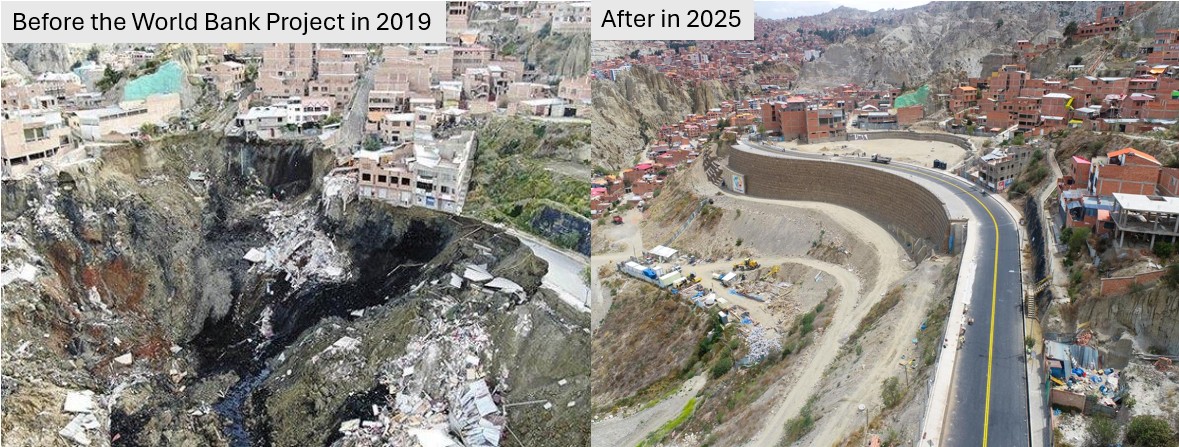
Before and after the project intervention at the Kantutani landslide site in La Paz. Credit: Municipal Autonomous Government of La Paz (GAMLP)
Strengthening Early Warnings City-wide
With support from the World Bank, the Global Facility for Disaster Reduction and Recovery (GFDRR) through its Enhance Bolivia’s Capacity to Promote Resilient Infrastructure technical assistance, and the SURGE Umbrella Program funded by the Swiss State Secretariat for Economic Affairs (SECO), La Paz has taken major steps to modernize how the city monitors hazards, shares information, and prepares residents for potential emergencies.
A key improvement has been the modernization of the city’s forecasting capabilities. A new meteorological monitoring platform, now fully operated by the Municipal Early Warning Unit (USAT), enables real-time alerts and sharper weather forecasts, improving the reliability of the entire early warning system.
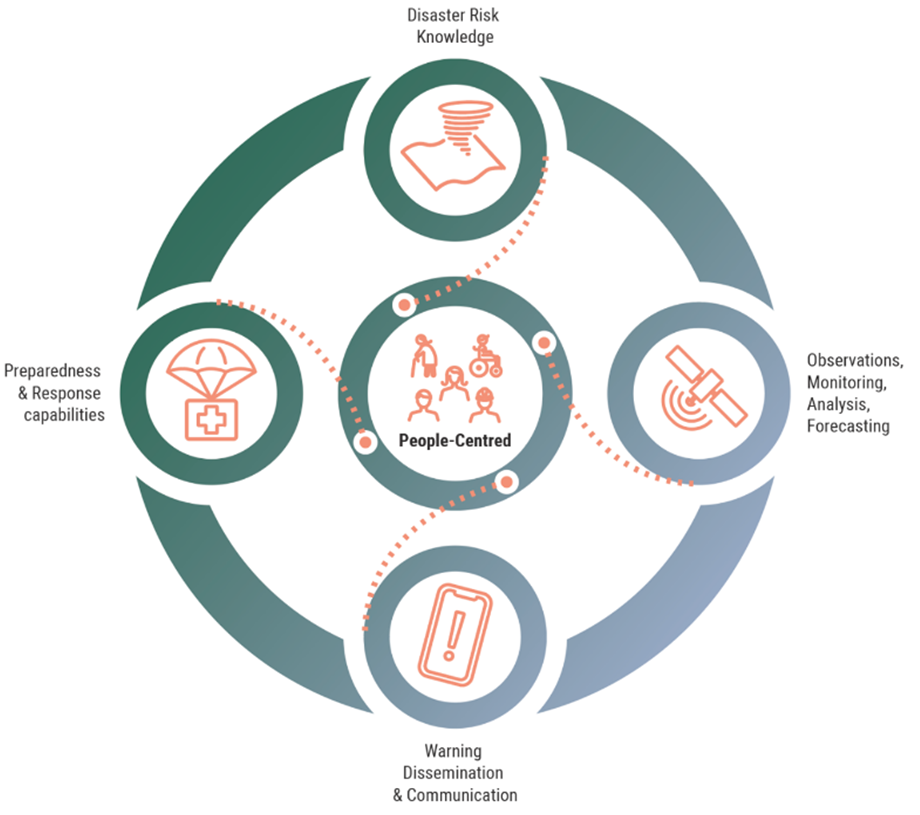
Figure 1. The Early Warnings for All Initiative Framework
At the same time, the GFDRR World Bank team supported a nine-module hybrid training program for more than 50 municipal risk specialists. The program strengthened practical skills in hydrological and hydraulic modeling, threshold calculation, exposure mapping, and alert formulation, enabling teams to produce and communicate more accurate warnings. “Strengthening our local teams is essential. The more capacity we have at the municipal level, the faster and better we can act,” shared by a representative from USAT.
The most transformative element is the citywide communication strategy developed through a partnership with a local non-governmental organization. Based on a detailed capacity assessment and designed with municipal teams, the campaign—launched in 2025—aims to bring risk information closer to communities through clearer, faster, and more trusted messages. School outreach, neighborhood activities, and tailored communication materials help ensure that early warnings reach people in clear, actionable ways.
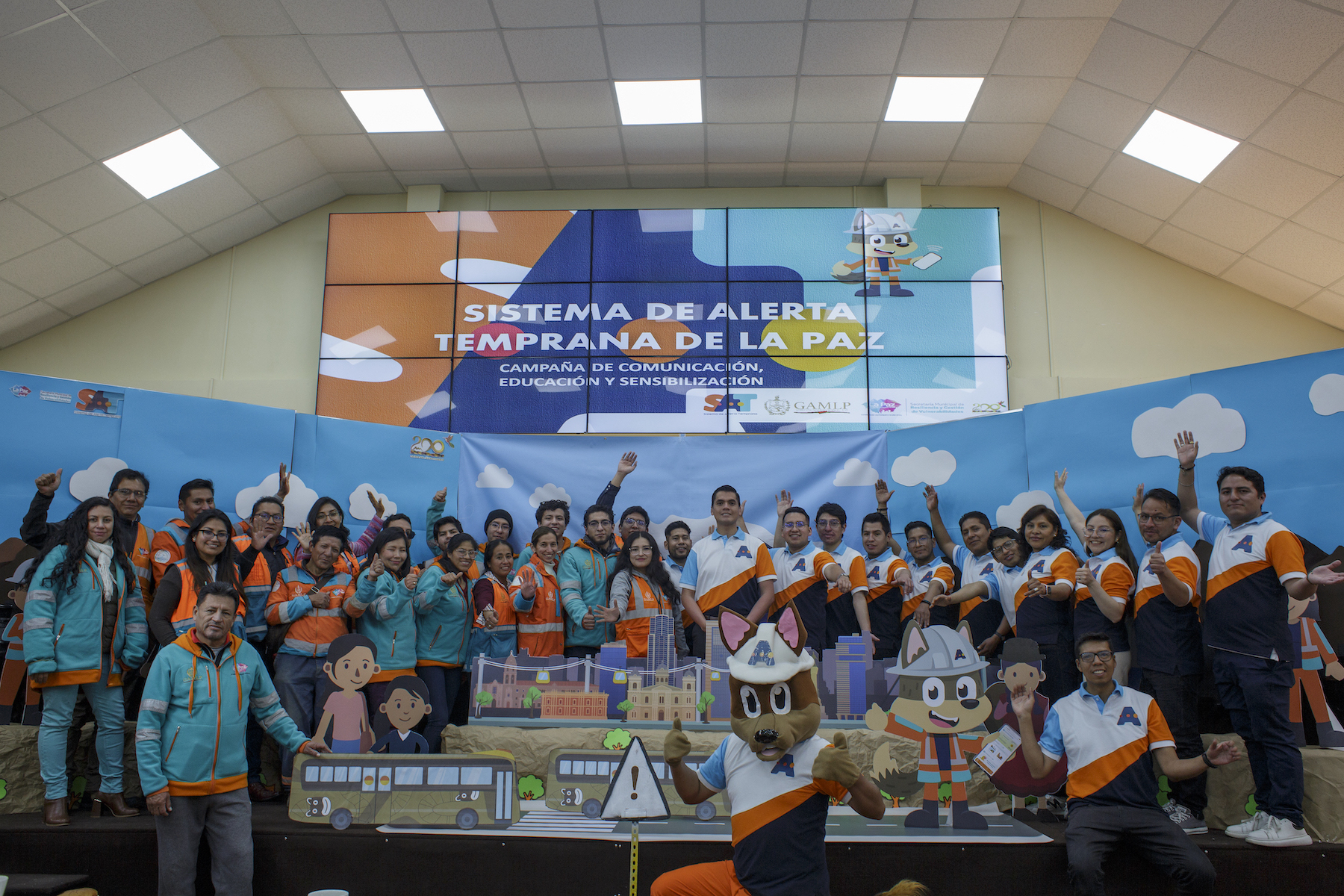
Citywide Communication Campaign for the La Paz Early Warning System. Credit: GAMLP
Scaling Local Progress into a National Resilience Agenda
The improvements in La Paz are part of a broader effort across Bolivia. Through GFDRR’s technical assistance, the Government of Bolivia is strengthening national systems for disaster preparedness, planning, and resilient infrastructure.
Working with the Ministry of Development Planning, the team supported the development of Bolivia’s National Disaster Risk Management Policy and Strategy. This process produced a roadmap—grounded in technical analyses and institutional assessments—that guides the creation of a more coordinated national disaster management system. The roadmap focuses on strengthening institutions, validating proposed policy reforms, and identifying opportunities to improve preparedness and recovery across all sectors and levels of government.
Building on this foundation, GFDRR is helping to integrate resilience into Bolivia’s infrastructure planning. Through studies and assessments, the team is supporting the incorporation of disaster risk management, urban planning, and climate adaptation measures into national and municipal investment programs.
Sustaining Resilience Together
Bolivia’s journey toward resilience connects community-level action with national reforms. Through GFDRR support, the country is gaining not only the tools and systems needed for preparedness, but also the knowledge and institutional capacity to make these improvements last.
As Bolivia strengthens its policies, planning, and infrastructure, each new effort—from citywide communication campaigns to national frameworks—brings the country closer to a safer, more resilient future. In a landscape defined by mountains and valleys, that future will depend not only on stronger systems, but on the collaboration and commitment of the people who make them work.