
Turning to nature for a more resilient Beira
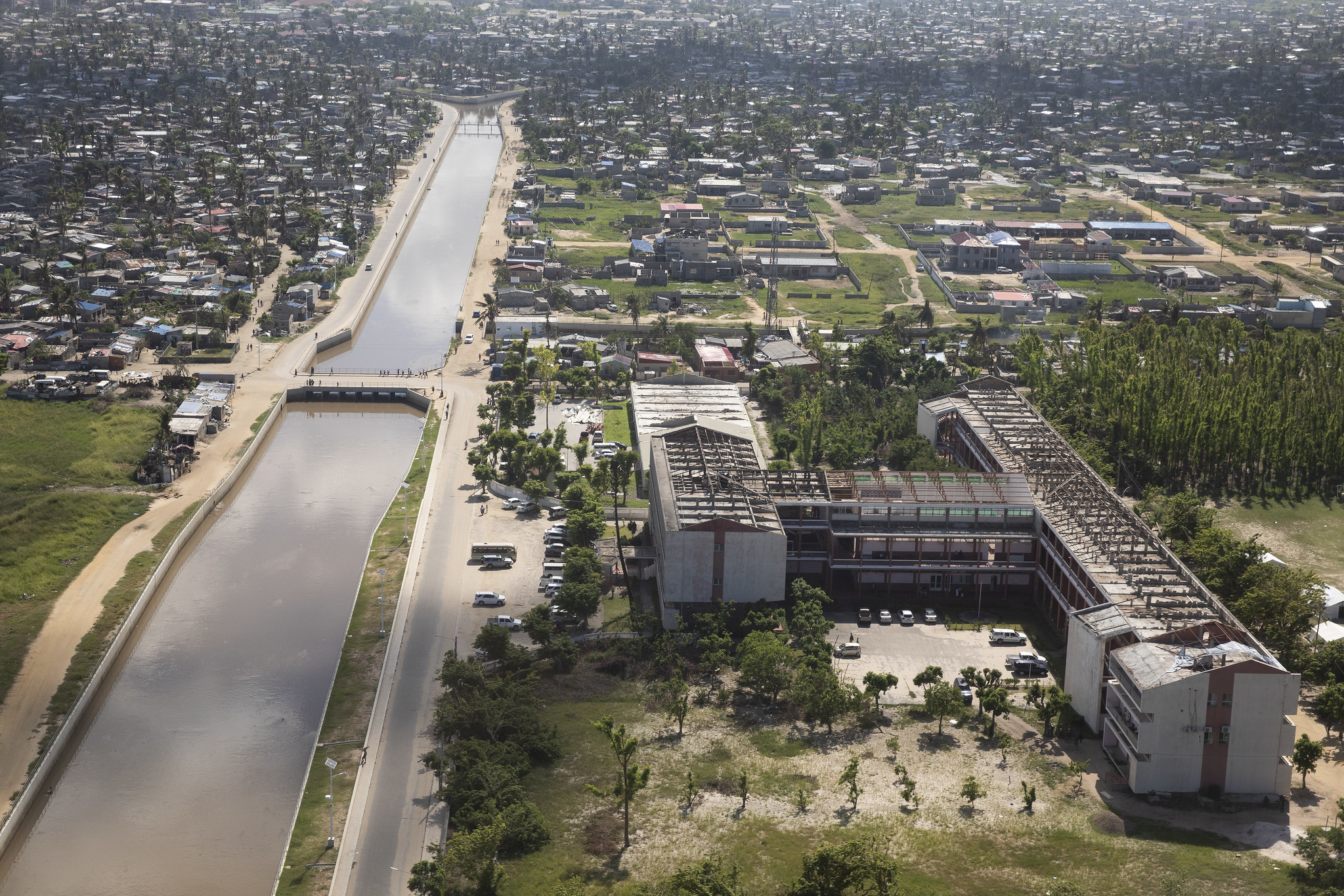
One of the strongest ever recorded storms in southern Africa, Cyclone Idai made landfall near Beira, Mozambique, on March 14, 2019 with winds of up to 177 kilometers per hour. Idai caused extensive damage to Beira, a low-lying coastal city, with much of its critical infrastructure, including roads and bridges, being destroyed or damaged by cyclone winds and floods.
GFDRR provided financial and technical assistance to Beira that helped lay the groundwork for a mix of green, nature-based solutions and conventional gray interventions which have since improved resilience for 50,000 people and expanded livelihood and recreational opportunities. The goal was not only to enhance resilience, but also to improve the quality of life for city dwellers through the provisioning of recreational, environmental, and economic opportunities as an added value of nature-based solutions. GFDRR support for these efforts was provided under the auspices of the World Bank-financed Cities and Climate Project.
At the center of this initiative was a 17-hectare, multi-functional urban green park along the Chiveve River. This entailed the continued restoration and preservation of Chiveve’s stormwater drainage and retention function by rehabilitating its degraded mangroves and native flora. This also increased the number of recreational and public spaces alongside the river through the construction of pedestrian routes, event venues, a local market, kiosks, and other community areas.
"Before the draining canals were rehabilitated, when it rained, the water would come inside the house. But after the basin was built, we started to get relief. We don’t have any problems with water in the community anymore." – Isabel Matos, Resident of Beira, Mozambique
The Chiveve River, a 3.5 kilometer tidal river that traverses Beira’s central business district, was a focus of the initiative as its intrinsic ability to absorb and mitigate floods, while also providing other societal benefits, had been significantly reduced due to, among other factors, a severe degradation in the river itself, its mangroves and native vegetation. Today, the Chiveve is now flowing healthier than before, without trash and waste, and residents feel safer in areas around the park. Over the longer-term, it is hoped that the green urban park will increase the perceived and realized value of the river’s space, reducing future encroachment and leveraging the new economic infrastructure as a funding source for the continued operation and maintenance of the park.
In addition to the urban park, GFDRR also supported the rehabilitation of the first phase of Beira’s drainage system, the construction of flood control stations, and the establishment of a water retention basin. Beira complemented and strengthened these efforts by engaging with the local community. The city, for example, brought together community groups to lead river clean-ups, establish a waste-collection program for informal settlements, and create outreach campaigns to raise awareness about the river’s importance and role in mitigating urban flooding.