

Foreword

Takahiro Tsuda
Former Director,
Multilateral Banks Division,
International Bureau
Ministry of Finance, Japan

Ming Zhang
World Bank Group Director
for Urban, Subnational
Finance, Tourism and
Disaster Management
Disasters continue to exert profound macroeconomic impacts—disrupting lives, communities, and jobs. Investments in disaster risk management (DRM) are a strategic necessity for sustainable development and economic growth. DRM reduces the losses incurred by disasters, lowers the financial burden of recovery, and safeguards past investments. It opens pathways for more resilient and inclusive growth.
The Global Facility for Disaster Reduction and Recovery (GFDRR) is a global leader in advancing DRM for international development. It anchors technical expertise in disaster and climate resilience across the World Bank, the largest international financier of DRM. Through targeted grants, analytics, and technical assistance that inform and strengthen country programs, GFDRR helps to protect lives, livelihoods, and economies and to ensure that the needs of the most vulnerable people and countries are addressed.
As Chair and Co-Chair, we view GFDRR as a proven partnership model that unites countries, donors, and experts in shared efforts to strengthen resilience. Its credibility and collaborative spirit continue to make it an essential channel for achieving impact.
Fiscal year 2025 marked another year of sustained progress toward GFDRR’s mission and objectives. Demand for its expertise and support remains high, reflecting the capacity gaps that many low- and middle-income countries face in identifying, designing, and implementing investments. In a resource-constrained environment, GFDRR’s catalytic role has been particularly valuable, demonstrating how small, strategic grants can shape large-scale, risk-informed development programs. This report captures those achievements and the measurable impacts GFDRR has achieved across countries and sectors as we conclude the 2021–2025 Strategy period.
This year also marks the beginning of a new chapter, with the approval of GFDRR’s new 2026–2030 Strategy. The strategy reinforces the Facility’s commitment to country-driven action aligned with global frameworks, including the Sustainable Development Goals, the Paris Agreement on climate change, and the Sendai Framework for Disaster Risk Reduction. It sets out a clear vision to embed disaster resilience across policies, systems, and investments—rooted in national priorities and local realities and nourished by global knowledge and best practices.
The strategy outlines GFDRR’s demand-driven model, linking country needs with technical expertise, financing, and partnerships to deliver impact at scale. It emphasizes measurable results, introducing a strengthened results framework with specific quantitative targets, including a goal to improve climate resilience for 100 million people by 2030.
As this new strategy takes effect, GFDRR’s work will continue to be guided by principles of inclusion, citizen engagement, and country ownership, with a focus on reaching those most affected by climate and disaster risks, including in fragile and conflict-affected settings. By strengthening local capacity and ensuring that resilience investments benefit the most vulnerable, GFDRR helps countries build systems that are more effective, sustainable, and adaptable to a changing risk landscape.
We extend our deep appreciation to GFDRR’s partners and stakeholders for their continued support in a challenging global context, and we warmly welcome new partners joining our mission. Your collaboration is essential to realizing our shared vision of a world where communities and countries are more resilient to natural hazards, climate risks, and other shocks, and where the human and economic costs of disasters are reduced.

Introduction

Niels Holm-Nielsen
GFDRR Practice Manager
Resilience goes beyond response. It delivers a triple return: saving lives and avoiding losses, strengthening economies, and generating social and environmental benefits. More than protection, it is an investment that drives progress and shared prosperity and is, therefore, integral to global development. Disaster risk management (DRM) helps countries safeguard people and assets. It reduces the risk and uncertainty posed by hazards that suppress investment, thereby stimulating economic growth and job creation. It also creates safer and more livable spaces, laying the foundations for long-term resilience.
Guided by this vision, the Global Facility for Disaster Reduction and Recovery (GFDRR) and its partners aligned around the 2021–2025 Strategy as a shared vision for disaster and climate resilience. In 2022, we launched the GFDRR Umbrella Trust Fund to implement this strategy more effectively, by streamlining governance, consolidating financing, and improving results tracking. As we conclude that strategy and move into our new 2025–2030 Strategy, we build on this foundation with an even stronger emphasis on measurable results and sustained impact.
Key Achievements
This year, our upstream and analytical work continued to inform and enable large-scale resilience investments for the countries we support and for the poor and vulnerable. Often delivered by World Bank task teams as technical assistance to governments, our support helped integrate and improve disaster and climate resilience across government programs, informing over $8 billion in new development financing across 50 countries.
GFDRR continues to support countries to strengthen their crisis preparedness capacity. In 2025, the Facility leveraged the rolling out of the World Bank’s Crisis Preparedness and Response Toolkit to help governments assess their crisis readiness, identify system capacity gaps, and help them target priority investments that build stronger disaster response systems. We delivered this through technical assistance, workshops, formalized training, and simulation exercises to governments driven by the extra motivation of efficiently accessing, allocating, and implementing financial resources from the Crisis Preparedness and Response Toolkit.
Our work on DRM policy frameworks is helping countries strengthen the enabling environment for resilience. This year, GFDRR funded technical assistance to a record 19 countries embarking on new regulatory and policy reform programs critical to risk-informed development.
GFDRR’s support for nature-based solutions has had a transformative impact on their uptake by countries. The World Bank has financed 177 projects that use nature-based solutions for DRM in the 5 years since GFDRR began support, nearly triple the 61 such projects it financed in the preceding 5 years.
Emerging Opportunities
Through its analytical engagements, GFDRR is increasingly supporting countries in linking resilience with job creation, aligning with the World Bank’s broader priorities. For example, an ongoing study on resilient urban development in the Pacific is exploring how urban resilience investments can generate jobs, support tourism, and reduce business disruptions during disasters.
GFDRR has been scaling up its support for work on extreme heat resilience, a growing challenge for cities and infrastructure systems worldwide, heightened by climate change. In response to strong country demand, we are funding the development of practical tools, analytics, and policy guidance—from heatwave alerting and response systems to urban cooling initiatives—to help reduce the health and economic impacts of heatwaves.
GFDRR was moved to the World Bank’s Infrastructure Vertical in 2025, creating new opportunities to integrate resilience into large-scale infrastructure investments. This integration presents a significant opportunity for GFDRR to expand its influence on infrastructure investments to reduce disaster risk. This has been proven by the demonstrated interest across global and regional infrastructure teams in deepening collaboration in response to growing country demand.
As an example, GFDRR is supporting the Transport Global Department to better embed resilience into country implementation of road standards and address heatwave impacts on transport systems. This has included nature-based solutions such as green drainage and vegetated slopes to manage erosion and road geohazards. In Africa, World Bank transport sector specialists are already drawing on GFDRR’s funding and technical expertise to deliver better DRM technical assistance to governments investing in transport, demonstrating scalable, cross-sectoral impact in urban mobility projects and regional transport corridors.
GFDRR is continuing to reshape its support for knowledge services. In response to guidance from donors, GFDRR is limiting the number of strategic global knowledge products it produces while reorienting toward country-specific knowledge products that respond directly to the particular challenges countries face.
In addition, we are expanding access to our knowledge base through a digital global public goods workstream. We are making key diagnostic tools and trainings, such as our City Scan, Nature-Based Solutions Opportunity Scan, and Emergency Operations Center training, publicly available online in order to reach a wider range of users.
Looking Ahead
We extend our sincere appreciation to the government of Japan for its dedicated leadership and partnership as Co-Chair of the GFDRR Partnership Council over the past two years. Japan’s vision and steadfast commitment to disaster and climate resilience as a founding member and a long-standing partner have been instrumental in shaping GFDRR’s global impact.
As we look ahead, we warmly welcome the government of Italy as the incoming Co-Chair from fiscal year 2026 and look forward to working together to further strengthen our collective efforts to build resilience and deliver results for the most vulnerable.

Executive Summary
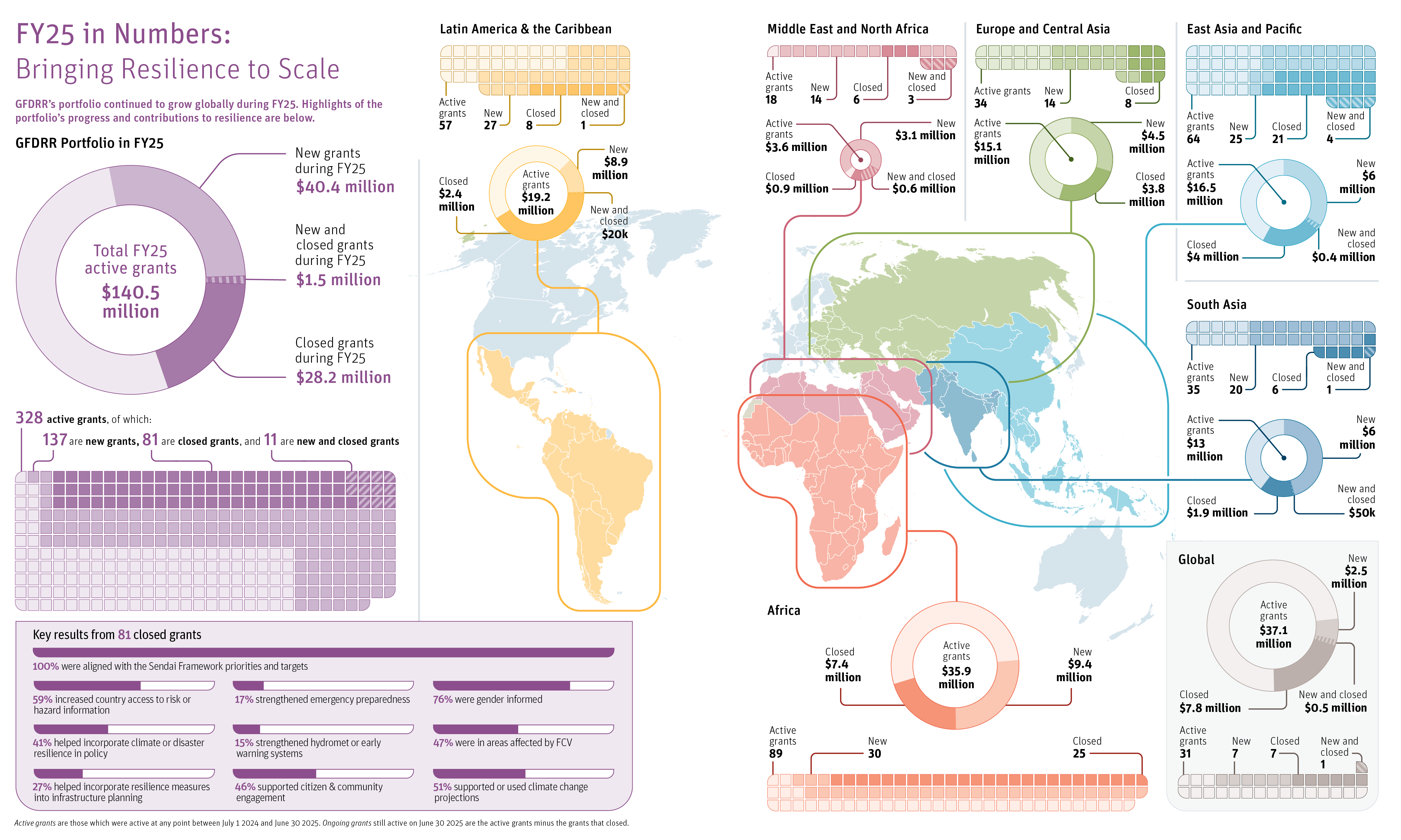
In fiscal year 2025, GFDRR supported over 100 countries through 328 grants. These activities informed $8.67 billion in World Bank disaster and climate resilience investments—a ratio of $253 informed for every $1 disbursed. This reflects the Facility’s catalytic role in shaping risk-informed development at scale.
The Global Facility for Disaster Reduction and Recovery (GFDRR) is a multi-donor partnership that supports low- and middle-income countries in their efforts to understand, manage, and reduce their risks from natural hazards and climate change. This annual report covers the activities and results of GFDRR’s Umbrella Program for fiscal year 2025 (July 2024 to June 2025), which consists of the anchor Multi-donor Trust Fund (MDTF) and five Associated Trust Funds (ATFs).
This year’s annual report is structured differently than in the past. The report has been streamlined to make it more accessible, and it places more emphasis on the results and impact to which GFDRR is contributing.
GFDRR continued to pursue its core mission, using grant funding, analytics, advisory services, and partnerships to support countries and communities to improve their disaster and climate resilience. Many governments lack the technical, institutional, and analytical capacity to turn the challenges they have identified into projects that can be financed. GFDRR plays a pivotal role in helping countries translate their disaster risk management (DRM) and climate adaptation priorities into bankable investments. By bridging the gap between problems and implementable solutions, GFDRR ensures that development finance, particularly from the World Bank, can be effectively deployed to finance resilience building.
GFDRR’s portfolio expanded during fiscal year 2025. GFDRR had 328 active grants during the year across 100 countries, with a total value of $140.5 million. These included 137 new grants ($40.4 million).
GFDRR supported strong country demand for disaster and climate resilience investments. GFDRR’s grants informed substantial World Bank financing for DRM. Informed financing reached a new peak, $8.67 billion, including $3.08 billion in International Development Association (IDA)-eligible countries, $2.31 billion in countries affected by fragility, conflict, and violence (FCV), and $0.36 billion in small island developing states. For each dollar disbursed by GFDRR, the Facility informed $253 in development financing.
GFDRR delivered according to its fiscal year 2025 work plan. GFDRR funded globally organized work as part of its role enabling local problem solving to be informed by global best practice. GFDRR funded the creation or improvement of 18 analytical tools, delivered 28 global knowledge reports and 189 country analytical and knowledge products, conducted 143 engagements that directly supported project teams, and organized or contributed to 87 events building capacity for government staff.
During the year in review, GFDRR closed 81 grants that contributed to achieving its objectives. These included grants that:
- Increased country access to risk or hazard information (59 percent),
- Helped incorporate climate or disaster resilience in country policies (41 percent) and resilience measures into infrastructure planning (27 percent), and
- Strengthened hydrometeorological or early warning systems (15 percent) and emergency preparedness (17 percent).
GFDRR’s closed grants incorporated the cross-cutting areas on FCV, gender, and inclusion. Of the 81 grants:
- Forty-six percent supported citizen and community engagement,
- Seventy-six percent were gender informed,
- Forty-seven percent were in areas affected by FCV, and
- Fifty-one percent supported or used climate change projections.
GFDRR contributes to long-term impacts realized through World Bank–financed projects over several years. This report assesses the performance and impacts of such projects, covering 64 projects that closed or were evaluated during fiscal year 2025. Nearly all of these projects achieved their development objectives and most projects exceeded, achieved, or almost achieved their DRM indicators. For projects that did not achieve their objectives or indicators, this was usually because of factors beyond the World Bank’s control.
This report provides detailed examples of the delivery, results, and impact achieved by GFDRR grants. GFDRR contributed to:
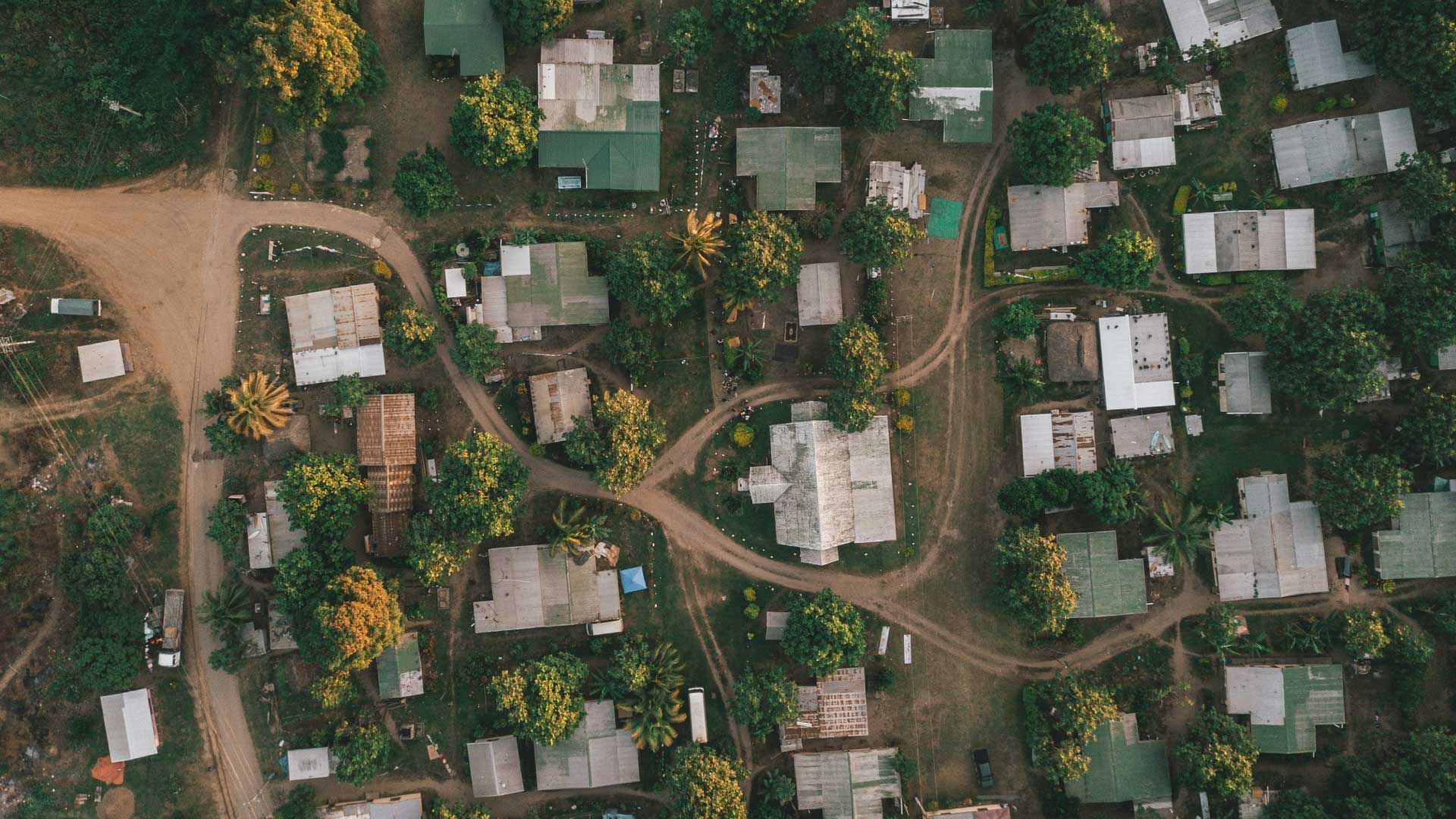
- The development of digital tools, platforms, and analytics in Bhutan, strengthening the country’s capacity for risk-informed decision-making
- Resilient reconstruction of bridges in Tajikistan, restoring connectivity and economic links affected by a flood and mudflow disaster
- Analytics around health sector resilience, informing the retrofitting of health facilities in Mauritania
- Structural strengthening measures in Türkiye, bolstering the resilience and energy efficiency of public buildings
- Locally led reconstruction of homes in Pakistan, providing a safer living environment for flood-affected communities
- Analytics around nature-based solutions in Viet Nam, informing the integration of mangrove restoration into coastal resilience efforts
- Construction of coastal resilience infrastructure in Bangladesh, protecting lives and improving agricultural productivity
- Helping ensure Belize’s financial resilience to disasters, including through disaster contingent financing
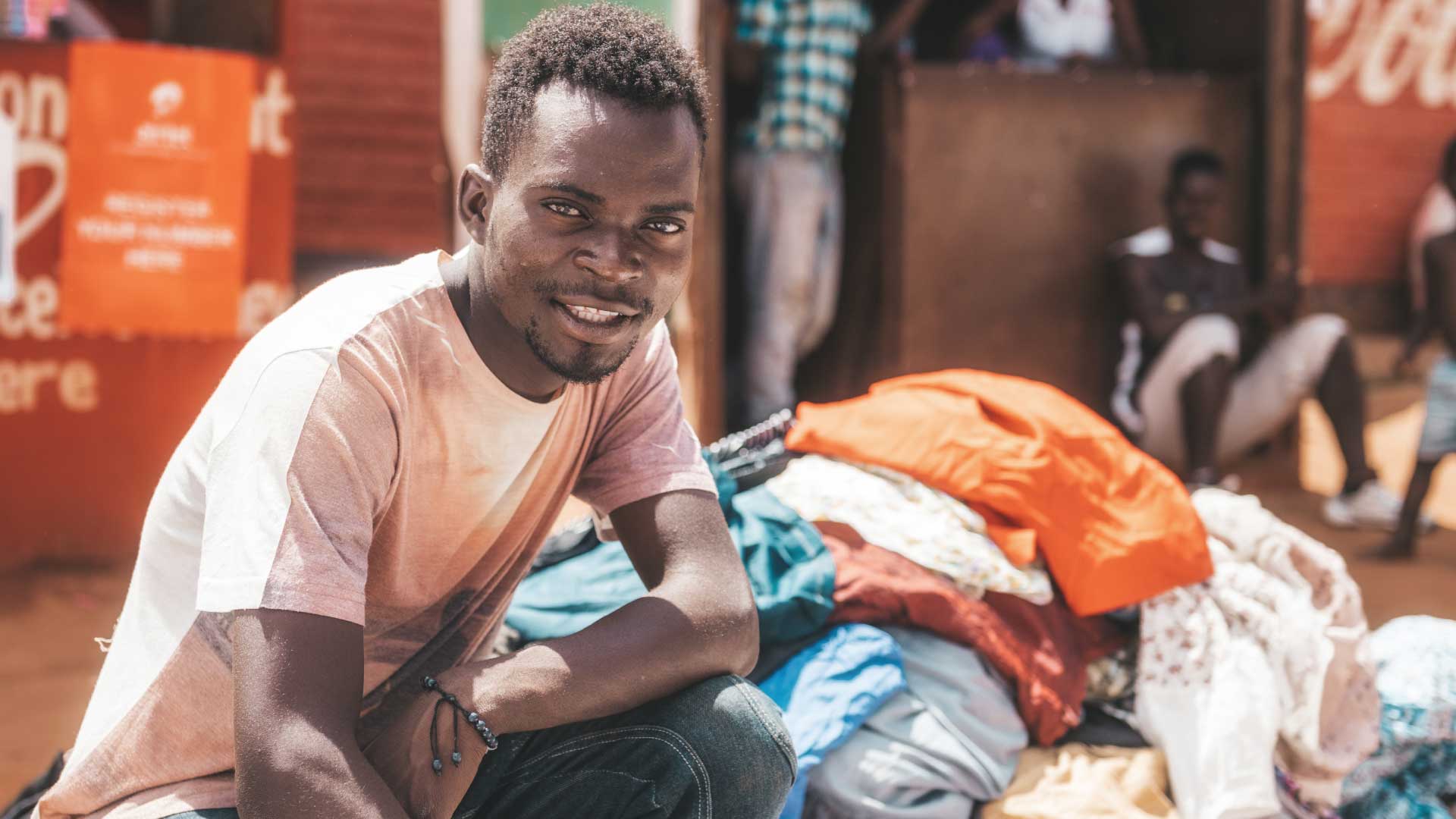
- Strengthening hydrometeorological services in Mali,1 expanding their reach and improving the ability of farmers to make decisions
- Rehabilitation of emergency operations centers in Haiti, strengthening the country’s emergency preparedness and response capacity
- Analysis of the interaction between displacement dynamics and disaster risk in Burundi, informing the response to a recent refugee crisis
- Helping Tonga embed disaster resilience and social inclusion into education, ensuring that school infrastructure protects learning continuity and leaves no one behind.
This year, GFDRR expanded its role as both a convener and a driver of thought leadership in disaster and climate resilience, strengthening its position as a hub for knowledge, capacity building, and collaboration.
GFDRR has continued to pursue strategic partnerships to achieve its mission. It has conducted joint high-level advocacy to drive delivery and achieve common goals. In addition, it has funded activities that engaged partners to access specialized technical or academic expertise, to deliver high-quality analytics, to pursue opportunities to crowd-in innovation and scale knowledge-sharing, to sharpen World Bank analysis, and to gain alternative perspectives.
Finally, as fiscal year 2025 represents the end of delivery under GFDRR’s 2021–2025 Strategy, the report includes a summary of delivery under the GFDRR Umbrella. The GFDRR Umbrella has grown steadily, with the active portfolio expanding from 134 grants in FY2022 to 328 in FY2025. Demand has remained strong and stable across regions. GFDRR informed $22.19 billion in World Bank financing over 2022–2025, with $197 informed per $1 disbursed. Although earlier monitoring and reporting limitations mean that only some aspects of delivery are fully comparable over time, these systems were strengthened over the period of the 2021–2025 Strategy, allowing more consistent tracking of results and portfolio performance. Indicators show that GFDRR has sustained support for its objectives and cross-cutting areas as its portfolio expanded.
1
GFDRR Objectives
Evidence and Knowledge for Decision-Making
GFDRR’s first objective is that evidence and knowledge on effective disaster and climate resilience approaches are generated and shared for improved policy and practice. This requires ensuring that countries and communities have access to the information they need to make informed decisions, shifting from understanding risk to managing risk, and promoting and improving policies for effective decision-making in disaster risk management (DRM) and climate change adaptation.
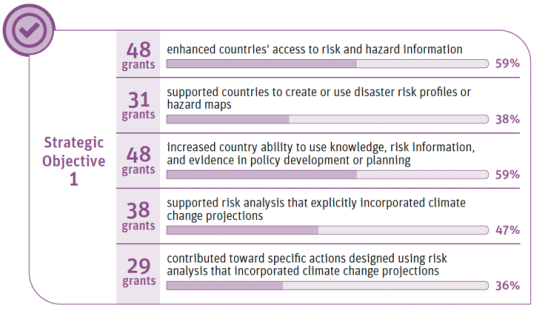
GFDRR has a long track record of supporting cutting-edge technology, analytics, and economic analysis that support these requirements. The increasing frequency and complexity of disasters has heightened demand for rapid, data-driven assessments. This has reinforced the relevance of GFDRR analytical tools such as GRADE and impACT360, which offer governments and partners timely insights to inform financing and recovery, and which have enabled increased support for post-conflict contexts and multi-hazard environments.
GFDRR analytics are prioritizing integration, innovation, and influence. GFDRR global grants support developing analytical tools across a wide and increasingly integrated range of DRM topics. Many of these tools are used and updated repeatedly with refined methodologies, increasing the accuracy and cost efficiency of the information they provide. GFDRR is supporting expanding the influence of these models to address a wider range of questions connected with climate risk—for example, using the Unbreakable Model to assess socioeconomic resilience from disasters. [See Full Report]
In Focus Stories

Risk-Informed Development
GFDRR’s second objective is that risk-informed development is adopted at national, subnational, and community levels, using integrated, inclusive, and participatory approaches. This requires reducing existing risk by strengthening infrastructure, enhancing urban and rural resilience, and mainstreaming disaster risk management (DRM) across sectors.
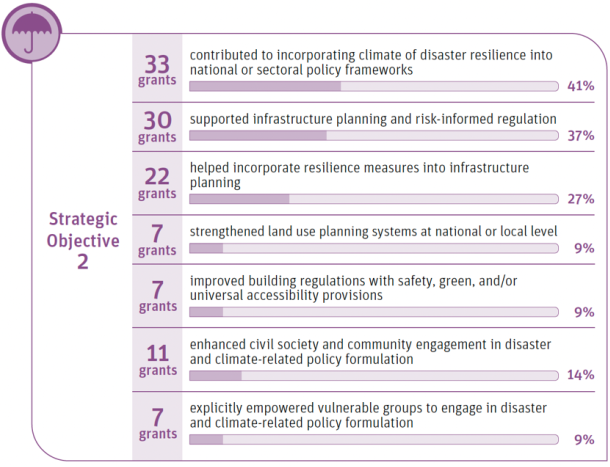
To achieve this, GFDRR helps countries mitigate the exposure of planned infrastructure, prioritize disaster risk reduction investments and asset management systems, increase access to disaster-resilient design standards, reduce disaster and climate risk in operations management, and develop policy and institutional frameworks for risk reduction and business continuity. The Facility supports the design and implementation of resilient infrastructure, facilities, and systems across sectors such as transport, energy, education, and health. It also supports work to improve building resilience, including through improved housing and building regulations.
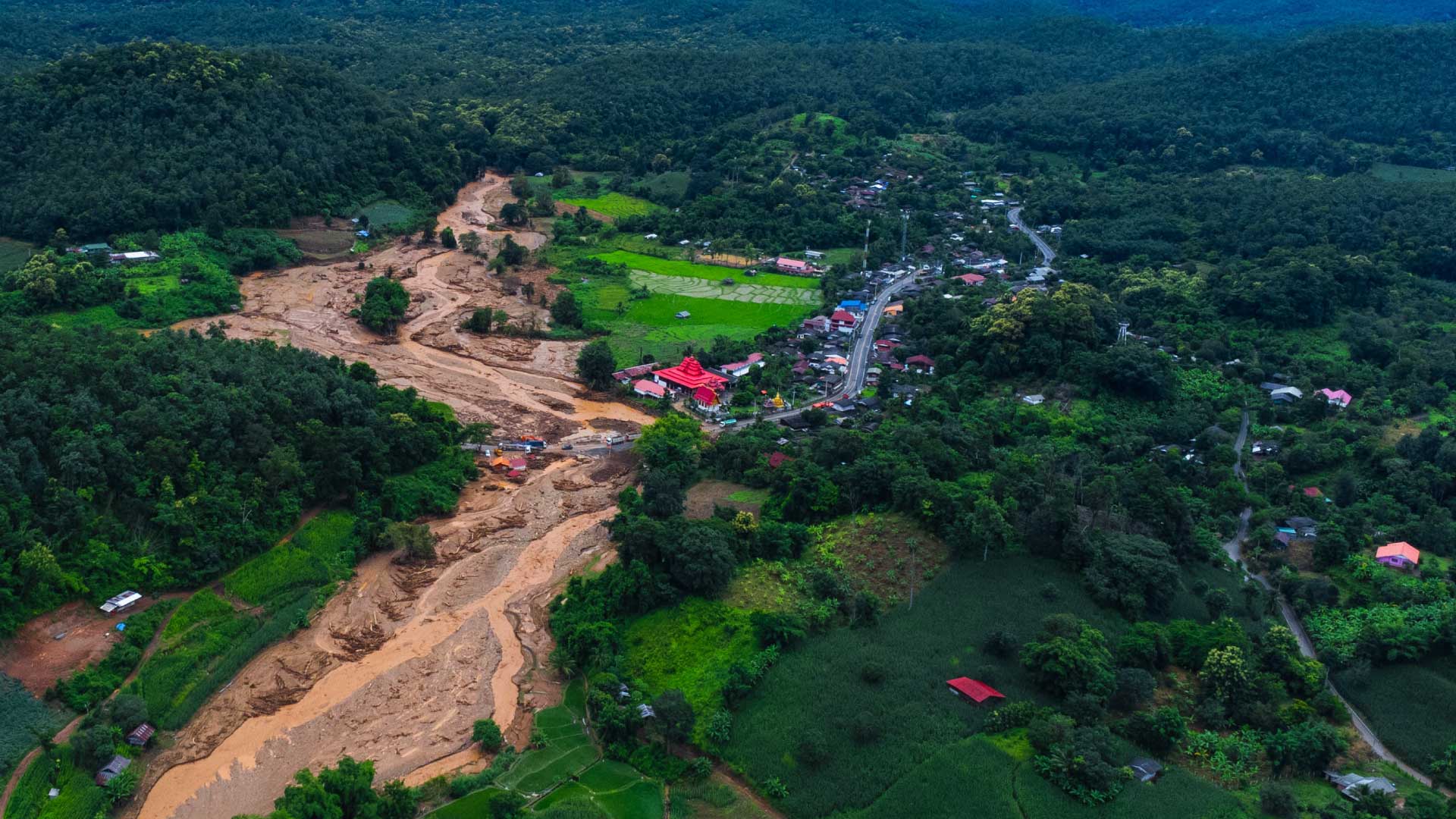
GFDRR addresses the urban resilience agenda by helping cities mobilize private capital and by tackling regulatory and financing barriers. It also supports risk reduction investments, particularly through nature-based solutions (NBS) that provide cost-effective strategies to reduce disaster risks and bolster climate resilience while delivering benefits for biodiversity, communities, and local economies. [See Full Report]
In Focus Stories
Financing Investments for Disaster Risk
GFDRR’s third objective is for governments in vulnerable countries to have access to additional investments for scaling up disaster and climate-resilient building. This requires both facilitating and informing the World Bank’s financing of disaster risk management (DRM) investments and also improving financial and fiscal planning and readiness to address disaster and climate-related shocks.

GFDRR activities improve governments’ access to investments for DRM by informing and improving the quality of World Bank–financed projects. GFDRR supports country-level analytics that serve as the basis for the Country Partnership Frameworks that lay out priorities for World Bank support and project pipelines. In some cases, GFDRR-funded analytics inform investments of other development partners.
GFDRR also improves countries’ access to robust disaster risk financing (DRF) mechanisms. Damages from disasters are costly and ultimately become liabilities on governments’ balance sheets, limiting long-term growth and economic development. GFDRR helps governments manage these costs and liabilities through financial and fiscal planning, promoting the importance of prearranged financial resources to mitigate the impacts of shocks on fiscal balance and debt sustainability. This includes funding disaster risk analytics to increase the capacity of government to make more informed financial risk decisions around disasters through risk retention and transfer. Increasingly, GFDRR also supports the World Bank’s crisis preparedness tools, which help countries better respond to disasters. These tools provide flexibility to help countries put contingent resources in place as well as speeding and scaling up access to new financing when disasters strike, giving countries immediate access to the funds they need to manage the impact. Finally, GFDRR promotes mechanisms that mobilize financing and investments in disaster resilience. [See Full Report]
In Focus Stories
Disaster Preparedness
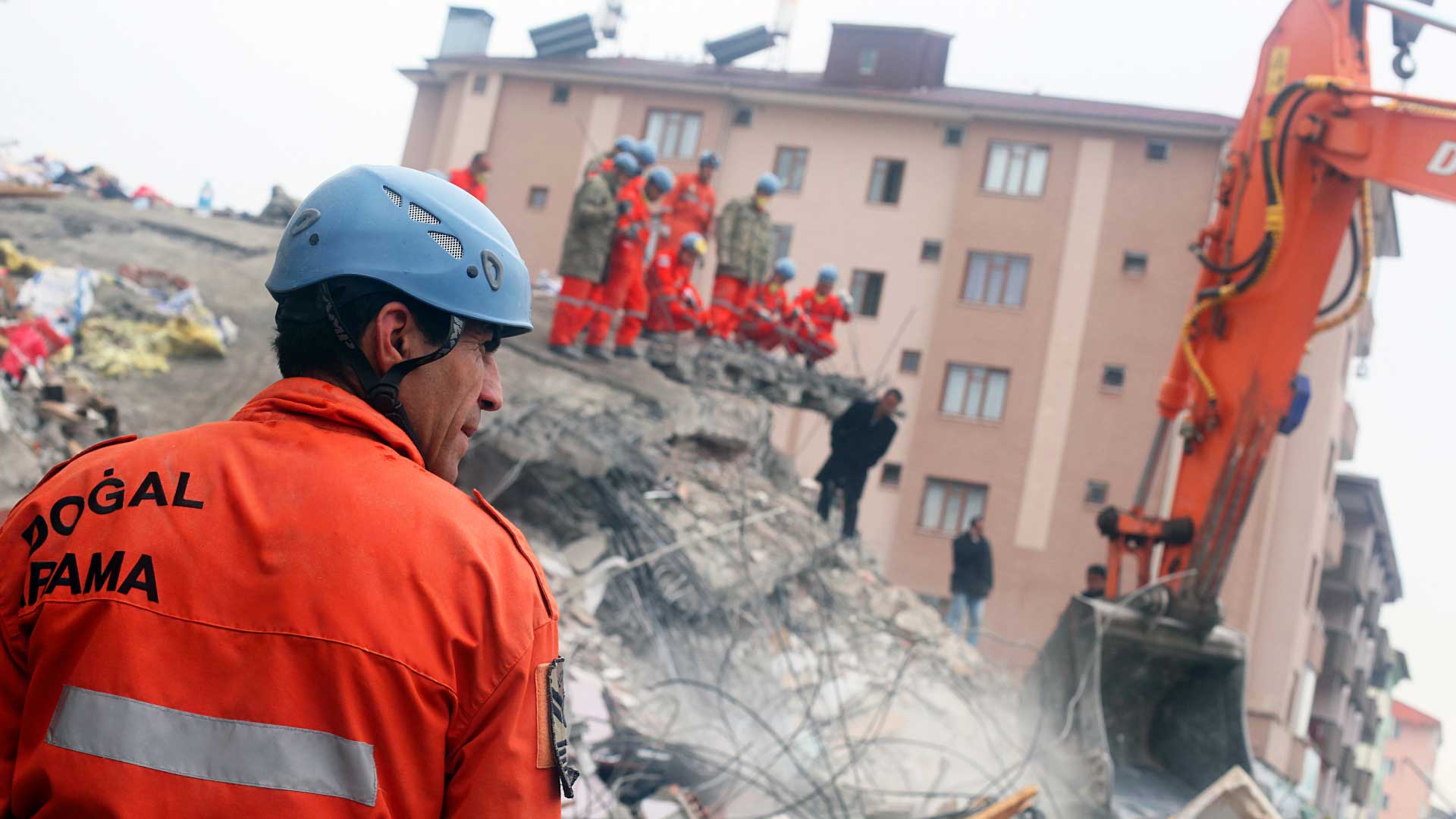
GFDRR’s fourth objective is to increase countries’ capacity for disaster preparedness and resilient recovery at national, subnational, and community levels. This involves enhancing community and government readiness by improving access to hydrometeorological (hydromet) data and early warning systems (EWS), supporting adaptive social protection measures, building emergency response capacity, and supporting resilient recovery.
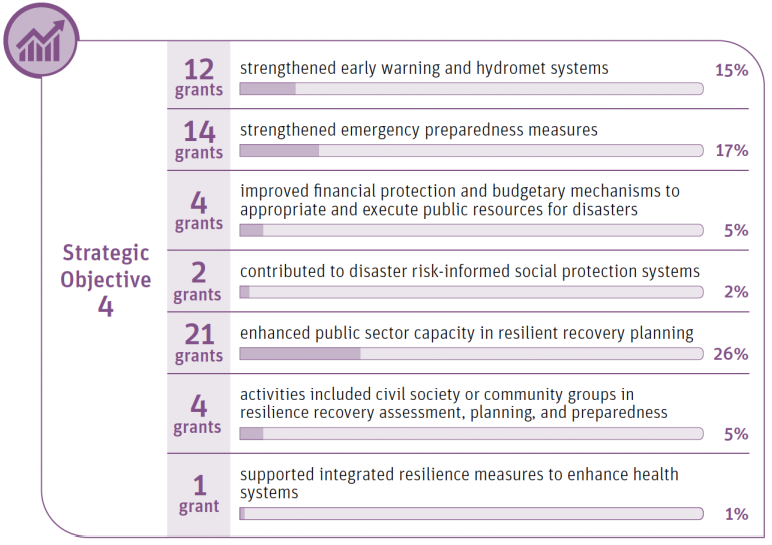
GFDRR supports open access to hydromet data, the generation of user-oriented climate services, and the delivery of actionable early warning information while also improving the sustainability and impact of investments in hydromet and warning systems. It prioritizes last-mile connectivity and reaching the most vulnerable people, who are often excluded from access to warning systems.
GFDRR also helps governments strengthen their capacity to prepare for and respond to emergencies by taking a comprehensive view of the systems that protect lives, deploy resources, and support development outcomes. This includes helping establish legal and institutional frameworks with clear mandates and accountabilities as well as investing in personnel, facilities, equipment, and information technology for emergency preparedness and response. [See Full Report]
In Focus Stories
2
Cross-Cutting Areas
Disaster-Fragility, Conflict, and Violence Nexus
GFDRR seeks to address the links between disasters and fragility, conflict, and violence (FCV), which requires a holistic approach to building resilience. This means that disaster risk management (DRM) and resilience principles must be embedded into post-disaster recovery and preparedness efforts in contexts affected by FCV, ensuring that DRM operations are sensitive to the dynamics posed by FCV and finding relevant entry points to effectively address the disaster-FCV nexus in operations.
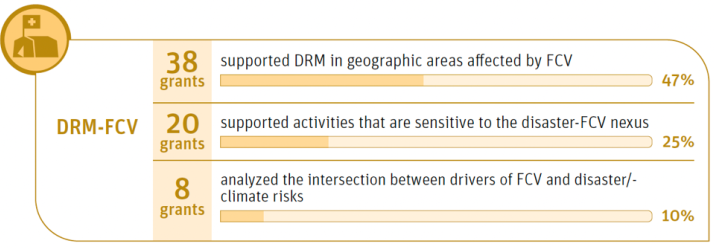
GFDRR enables operational support, strategic guidance, and critical diagnostics and analytics to enhance disaster resilience in FCV contexts. This work reflects a commitment across GFDRR to recognize that FCV countries require tailored DRM support to reflect their specific heightened risks. By investing in diagnostic tools and risk analytics specifically designed for FCV environments, GFDRR is enabling governments and partners to better anticipate and reduce these compounded risks. [See Full Report]
In Focus Stories
Inclusive Disaster Risk Management and Gender Equality
An inclusive approach to resilience reduces loss of life, lessens social and economic impacts, mitigates the costs of disasters, and ensures that no one is left behind. It requires that engagements reach and empower women and other vulnerable groups to participate meaningfully in decisions that shape their safety and recovery.
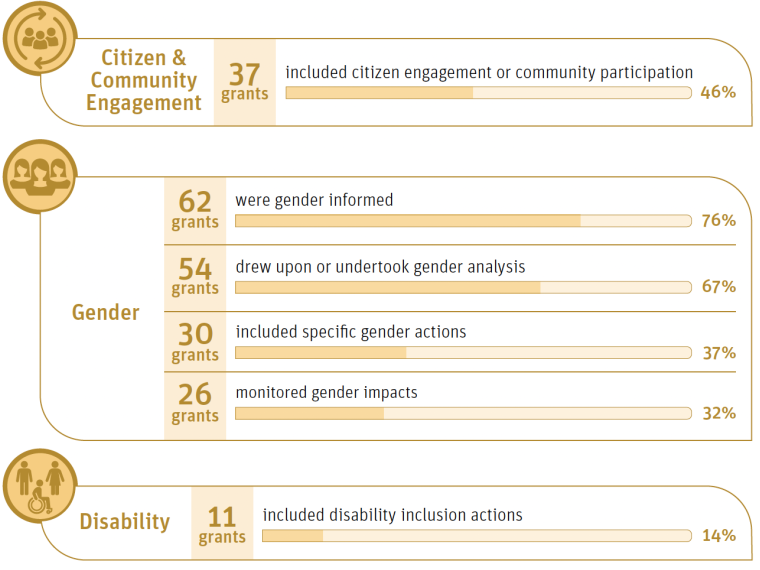
GFDRR promotes inclusive disaster risk management (DRM) across all its activities by advancing global knowledge, providing technical assistance, developing tools and guidance, and building partnerships, so that women, persons with disabilities, and marginalized communities are better integrated into disaster planning and resilience-building efforts. [See Full Report]
In Focus Stories