
Strengthening the Marshall Islands’ building regulatory framework for resilience
In the Republic of Marshall of Islands (RMI), the impact on jobs and livelihoods of disasters is profound, with average annual losses estimated at $28.9 million, representing 9.3 percent of the country’s GDP in 2025. RMI is now facing the prospect of even more frequent and severe disaster events, such as floods, due to climate change. In the capital and largest city Majuro, 96% of the city is at risk of frequent, climate-induced flooding. By the end of this century, RMI will likely experience more than 100 days of flooding every year.
In response, the government of the RMI has been forging ahead with an ambitious agenda to ensure that its development path can withstand the impacts of a changing climate. With support from the Global Facility for Disaster Reduction and Recovery (GFDRR) through the Africa, Caribbean, and Pacific European Union Disaster Risk Management Program as well as from the World Bank, a major focus of that agenda has revolved around strengthening its building regulatory frameworks for resilience.
Under the auspices of the RMI Urban Resilience Project, GFDRR and the World Bank have supported the implementation of the National Building Code Act of 2025, which paved the way for the regulation of climate and disaster resilience standards through the country’s National Building Code —a first in the country’s history. In addition to regulation of these standards, the landmark law also set the stage for the RMI to establish a formalized building permitting process, another first for the country.
“We are leading by example. Compliance is not just a requirement — it’s an investment in our people’s future.” – Thomas Heine, Minister of Public Works, Infrastructure and Utilities, Republic of Marshall Islands
Technical assistance from GFDRR helped in the design and implementation of solutions to challenges faced by the government in implementing the building code. The assistance has covered areas such as gaps in understanding and awareness of the building code among both public and private stakeholders, and gaps in the country’s technical capacity to process building permit applications.
For example, a World Bank technical team drew on GFDRR’s support to develop a set of standard forms and guidance notes to help ensure consistent, transparent, and efficient permit processing even in the absence of extensive in‑house technical expertise within the government. The team also drew on GFDRR support to help the government establish a policy and procedures framework for the Ministry of Public Works, Infrastructure and Utilities’ Building Safety and Regulations Division which will help with enhanced compliance of buildings to disaster and climate resilience standards, and systematic implementation of the National Building Code and the related legislation.
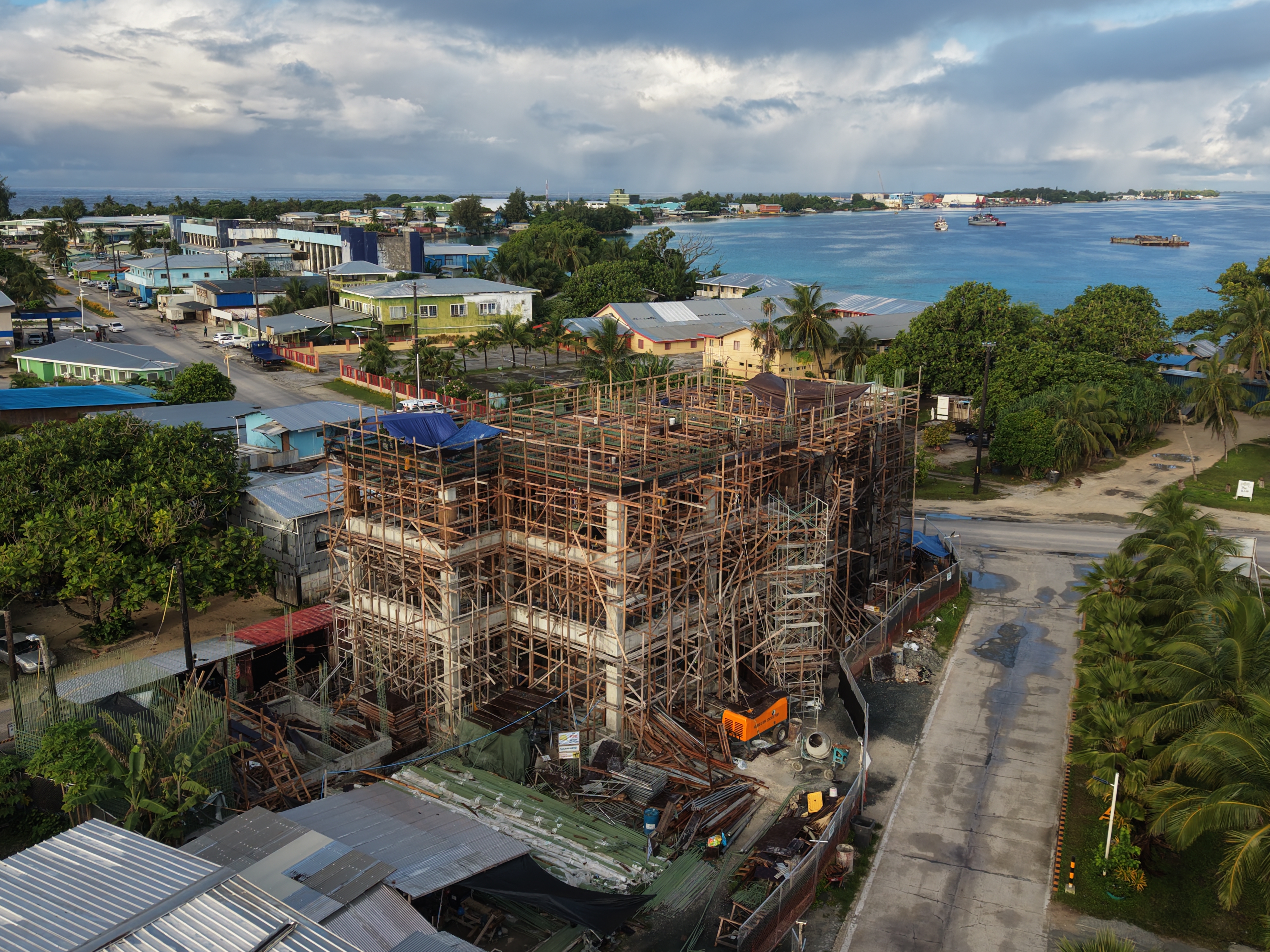
To date, the Building Safety and Regulations Division has issued one building permit, namely for a resilient multifunctional government facility, financed under the RMI Urban Resilience Project, which is expected to house key functions of the National Disaster Management Office and the Ministry of Finance, Banking and Postal Services, as well warehouse storage facilities for humanitarian activities. GFDRR also provided timely advice on the building’s fire protection review to highlight key building design elements that need to comply with the National Building Code and global good practices.
Even before GFDRR’s support to the implementation of the National Building Code Act, prior assistance from the facility helped create the impetus for the law’s enactment. Technical assistance supported the design of Catastrophe Deferred Drawdown Option operation approved in 2024, providing $12 million of contingent disaster financing, supplemented later by an additional $9 million.