By Ahmet Kindap, Bontje Marie Zangerling, Salih Bugra Erdurmus, Silvia Malgioglio, Tugkan Tanir
Italy and Türkiye share more than just a love for food: they share a geography defined by seismic risk. Both countries sit atop active fault lines that have shaped their landscapes and histories, and both have endured devastating earthquakes in recent decades. From the 1999 Marmara and 2023 Kahramanmaraş earthquakes in Türkiye to the 2009 L’Aquila and 2016 Central Italy earthquakes, these events have left lasting marks on communities and institutions alike.
The last earthquake in Türkiye renewed the urgency to strengthen the country’s resilience and address vulnerabilities in construction practices, enforcement, and institutional coordination. Beyond strengthening building codes, it is essential to ensure compliance, clarify roles and responsibilities, and establish a culture of accountability that prioritizes safety and quality.
To support these efforts, the World Bank has been working with the Government of Türkiye to assess the country’s current legal and institutional frameworks governing urban planning and construction. The goal is to identify gaps and develop actionable recommendations for enhancing reforms, drawing on international best practices. The review is examining several aspects such as zoning and land-use practices, the Turkish Building Earthquake Code, and the building inspection system, with a focus on their regulatory and operational capacity to enforce seismic safety standards and improve overall construction quality. As part of this collaboration, the World Bank organized a technical knowledge exchange visit for key Turkish government counterparts to Italy in July 2025, funded by the Bank’s Global Facility for Disaster Reduction and Recovery (GFDRR).
The Turkish delegation included representatives from the Ministry of Environment, Urbanization, and Climate Change; the Strategic and Budget Office of the Presidency, and the Insurance and Private Pension Regulation and Supervision Authority. Over five days, they met with Italian experts in Rome, L’Aquila, Pavia, and Milan to exchange insights on building codes, compliance, and post-earthquake reconstruction.
Strengthening institutions and reconstruction systems
In Rome, the delegation visited the Consiglio Superiore dei Lavori Pubblici, the national body responsible for building standards and approval of major infrastructure projects and met with leading professors from the University of Naples Federico II who support Italy’s national seismic resilience agenda.
In L’Aquila, engineers from the Special Offices for Reconstruction of L'Aquila (USRA) and Comuni del Cratere (USRC) shared a detailed overview of the reconstruction framework for the region. The delegation then visited multiple sites across the city, observing how both public and private buildings damaged in the 2009 earthquake have been reconstructed or strengthened with retrofitting using innovative techniques and new technologies.
In Pavia, the delegation visited the EUCENTRE seismic laboratory, where they learned firsthand about the center’s pioneering research on engineering innovation.
Preparedness, insurance, and professsional standards
The visit also examined how Italy’s broader institutional ecosystem supports disaster resilience. In Rome, the delegation met with the Italian Civil Protection Department (Protezione Civile), which coordinates national disaster prevention, preparedness, response, and recovery. In Milan, Regione Lombardia’s Civil Protection unit shared how regional authorities complement national systems to ensure rapid and coordinated emergency response.
Another key theme was the role of insurance in promoting compliance and risk reduction. Discussions with Istituto per la Vigilanza sulle Assicurazioni (Italian Insurance Supervisory Authority) and Generali Assicurazioni explored how construction and professional liability insurance mechanisms can help strengthen safety standards and financial preparedness.
Throughout the visit, the delegation was able to discuss the role of professional engineering certification and regulation in Italy, consolidating these lessons through detailed discussions with the Milan Provincial Order of Engineers (Ordine degli Ingegneri della Provincia di Milano).
Turning lessons into action
The exchanges identified several areas that could inform Türkiye’s ongoing reform agenda, including the introduction of professional liability insurance, establishment of technical committees to support code development, enhancement of professional engineering frameworks, and the adoption of new technologies for testing and simple retrofitting of residential buildings.
To complement the Italy visit, the World Bank organized a follow-up virtual knowledge exchange in September 2025 with Japanese experts on construction supervision systems, professional engineering standards, and seismic retrofitting practices. Japan’s perspective provided additional insights on how consistent standards and long-term investment in compliance can reduce risk over time.
As Türkiye moves forward, the exchanges with Italy and Japan —and lessons from other high-seismic-risk countries— demonstrate that resilience is built not only through technology or investment, but through learning from each other’s successes and mistakes. By connecting global expertise, the World Bank is helping transform lessons from past disasters into safer, stronger, and more sustainable futures.
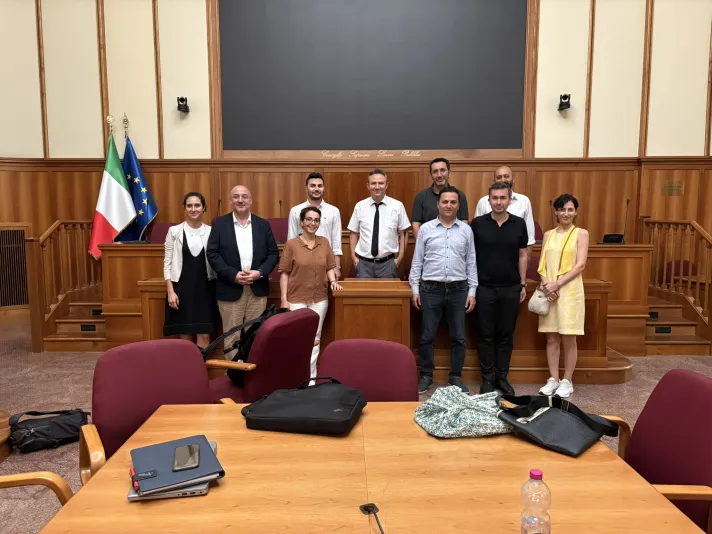
Visit to Consiglio Superiore dei Lavori Pubblici, independent technical body housed within the Italian Ministry of Infrastructure and Transport. Photo credit: S. Malgioglio/World Bank
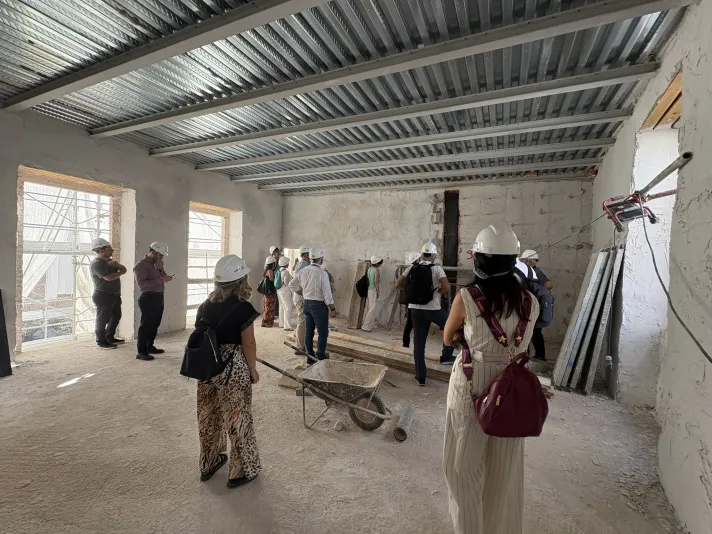
Visit to the construction site of private residences severely damaged in the 2009 earthquake in L’Aquila. Photo credit: S. Malgioglio/World Bank
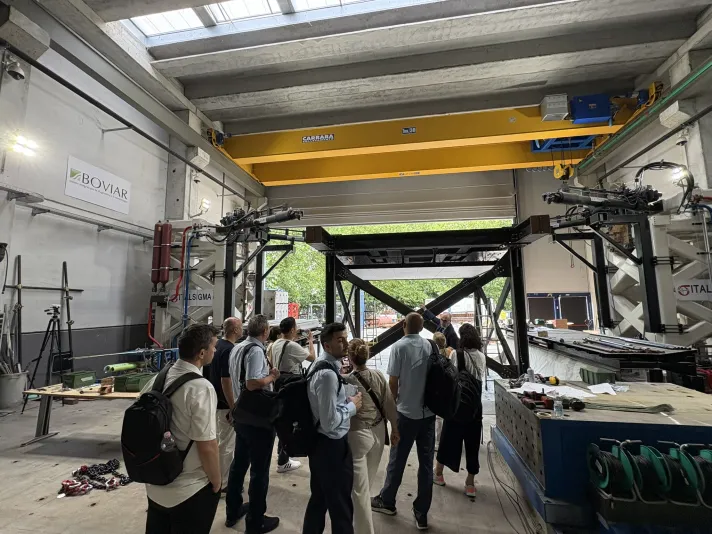
The EUCENTRE laboratory in Pavia features shake tables and testing e quipment for seismic engineering research and development. Photo credit: S. Malgioglio/World Bank