
From Hokkaido to Mongolia: Tackling the Challenge of Permafrost Road Degradation
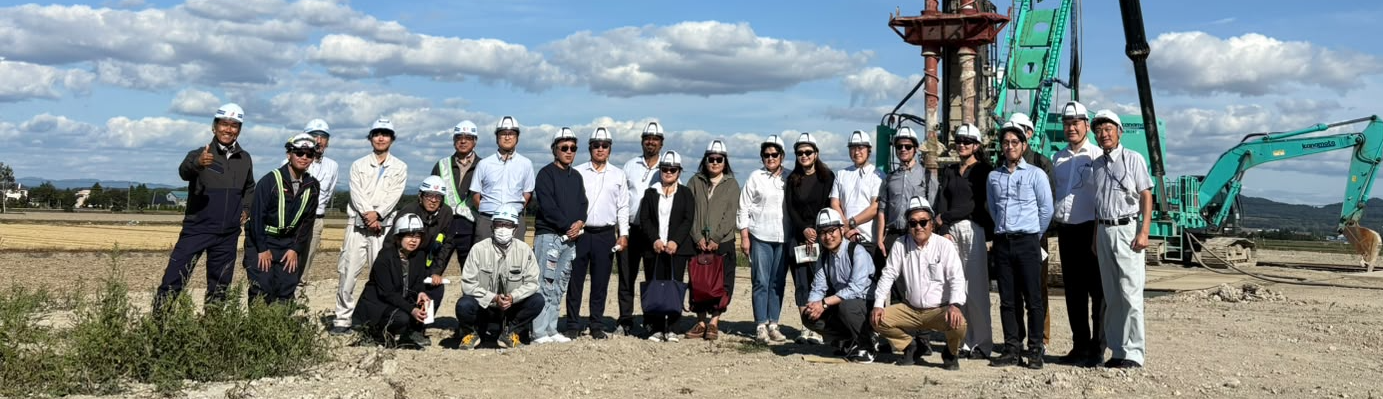
Study Tour participants at Project Site in Hokkaido. Photo: World Bank
Mongolia is one of the world’s most sparsely populated countries, making roads essential for connecting communities. In the country’s northern regions, however, many roads pass through permafrost zones, where the ground remains frozen all year round. As changing weather patterns drive temperatures higher, this permafrost is increasingly vulnerable to thawing, creating growing challenges for road infrastructure. Available assessments indicate that around two-thirds of Mongolia lies in unstable permafrost zones, while temperatures could increase by as much as 7.7°C by 2100.
In response to the growing risks, the Global Facility for Disaster Reduction and Recovery (GFDRR), through its Tokyo Disaster Risk Management (DRM) Hub, is supporting the World Bank-financed Mongolia Transport Connectivity and Logistics Improvement Project (MTCLIP). The project aims to develop evidence-based standards for roads in permafrost zones and test them on a pilot stretch of road.
The Project: A Standards-Based Approach
Permafrost degradation can cause land subsidence, infrastructure damage, and higher maintenance costs. In Mongolia, roads connect herding communities to markets and services, and disruptions can directly affect livelihoods, mobility, and access to essential services.
To address these challenges, the Tokyo DRM Hub is supporting technical assistance under the “Mitigating the risks associated with climate change impacted permafrost in the road sector in Mongolia” Project, financed by a $4.05 million grant. The grant finances the reconstruction of a trial road section incorporating a range of permafrost-resilient design approaches, along with permafrost testing, installation of monitoring equipment, and the development of updated road design guidelines.
The trial section will be equipped with advanced monitoring systems, including soil temperature sensors, traffic counters, weigh-in-motion sensors, and a weather station. Data collected over multiple seasons will help identify which engineering solutions are most effective.
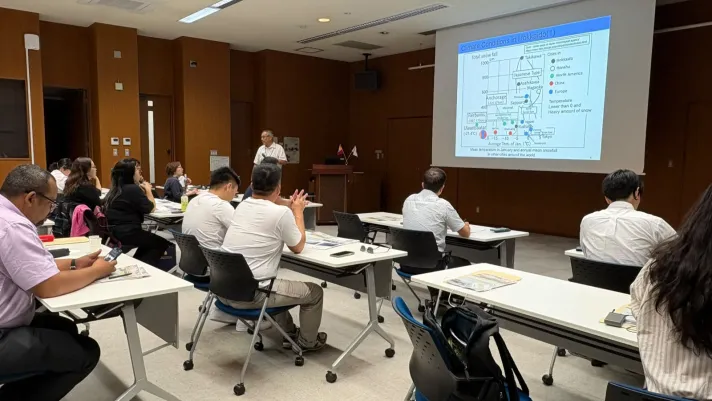
Lecture at the Civil Engineering Research Institute for Cold Region (CERI). Photo: World Bank
A Bridge of Expertise: From Hokkaido to Mongolia
Addressing permafrost-related road challenges requires specialized expertise. Kitami Institute of Technology (KIT) in Hokkaido, Japan's northern most island, brings this expertise to the project, drawing on decades of research in cold-climate engineering.
Led by Professor Dai Nakamura, the team worked alongside partners at Hokkaido University of Science, Pacific Consultants Hokkaido, and a Mongolian technical working group comprising representatives from the Ministry of Road and Transport (MRT), the Mongolian Road Association, and the Institute of Geography and Geoecology at the Mongolian Academy of Sciences.
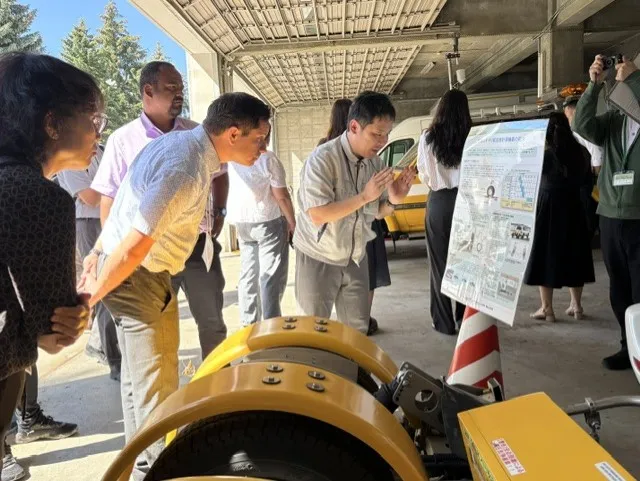
Introduction to Road Maintenance Equipment at CERI. Photo: World Bank
To support knowledge exchange under the project, a delegation from MRT traveled to Hokkaido in September 2026 for a three-day study tour organized by the KIT, Hokkaido University of Science, Pacific Consultants, and the Civil Engineering Research Institute for Cold Region (CERI).
Participants visited active infrastructure construction sites and research facilities, where they observed practical approaches to managing challenging ground conditions and learned about the testing and engineering methodologies that underpin infrastructure development in cold regions.
Through the tour, participants explored how these lessons could be adapted to Mongolia’s particularly demanding climatic and ground conditions, and how the findings could support the design and implementation of the planned pilot road section.
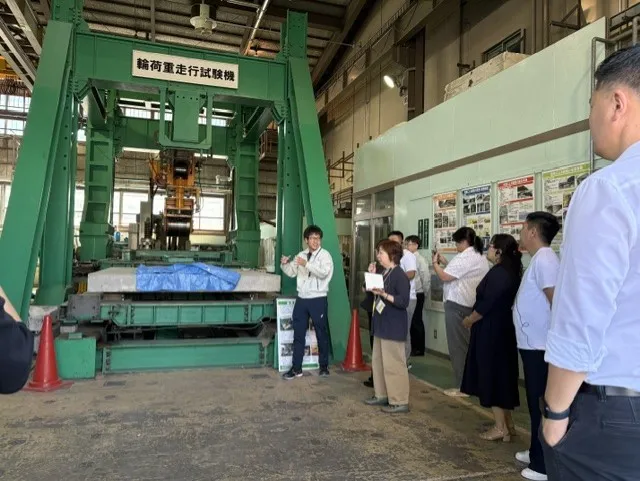
Introduction to load testing equipment at CERI. Photo: World Bank
Looking Ahead
The study tour helped clarify key questions for the next phase of the project, including the design of the pilot road, monitoring strategies, and the development of future national standards. As permafrost degradation becomes an increasingly urgent challenge across cold-region countries, the standards and methods developed through this project could offer valuable lessons beyond Mongolia.
By connecting Japanese cold-climate expertise with Mongolia's practical needs, GFDRR and the Tokyo DRM Hub are helping build the evidence base needed to support more resilient and climate-informed infrastructure decisions.