
The final day of the Technical Workshop on Risk-Informed Urban Planning in Liberia focused on how to translate planning decisions into implementation. Sessions introduced key tools—including zoning regulations, development controls, financial instruments, and enforcement mechanisms—to support risk-informed urban planning in practice.
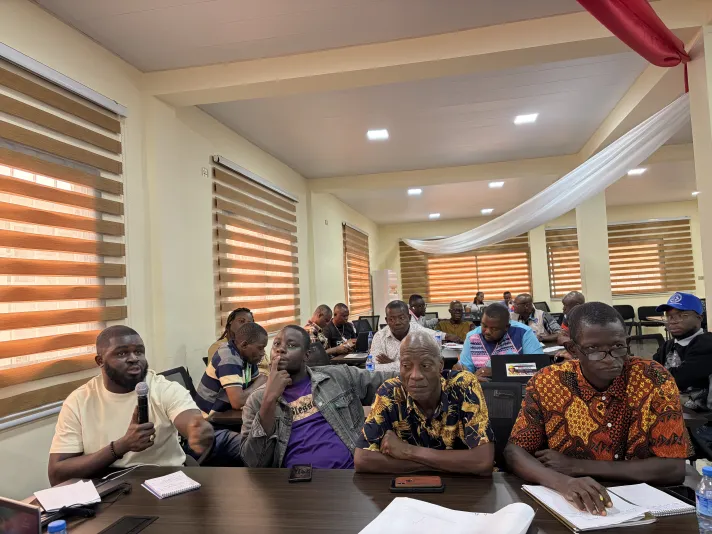
Participants worked in groups to develop concrete implementation pathways, identifying priority actions, institutional responsibilities, and potential financing options. City teams presented their proposed approaches, fostering peer learning and discussion on practical challenges.
The workshop concluded by reflecting on key takeaways and outlining next steps to advance risk-informed urban planning in Liberia.
Key Insights
The importance of effective implementation
A key takeaway was that implementation requires a combination of tools and strong institutional coordination. As highlighted in the sessions, planning frameworks alone are insufficient without mechanisms to operationalize them.
Zoning regulations, building codes, and permit systems provide the regulatory backbone, while financial instruments and incentives support implementation. Participants emphasized that enforcement is critical, especially in fast-growing urban areas.
The discussions underscored that effective implementation depends on aligning institutions, resources, and accountability mechanisms.
Translating priorities into action
Another key insight was the importance of translating planning priorities into actionable, city-level interventions.
Through group exercises, participants identified targeted actions—such as infrastructure investments, land use controls, and upgrading strategies—and mapped out implementation steps. This included defining responsible institutions and potential entry points.
The exercise demonstrated that actionable planning requires clarity on who does what, as well as realistic alignment with local capacity and resources.

Lessons Learned and Next Steps
Day 3 highlighted the need to connect planning with implementation through clear roles, tools, and financing mechanisms. Participants identified priority actions and pathways to move forward. Next steps include advancing city-level action plans, strengthening coordination across institutions, and integrating risk-informed approaches into ongoing urban planning processes.