Hazard Risk
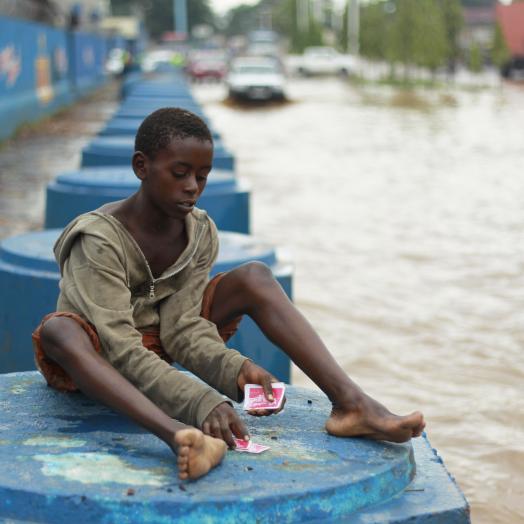
Burundi is exposed to a number of hazards, including earthquakes, landslides, river floods, and water scarcity. Factors influencing the country’s vulnerability include soil degradation, deforestation, high poverty levels, and population density. Further, after years of civil war, Burundi is transitioning away from a post-conflict state. Over the last decade, the poorest communities, including those returning to the country from exile, have settled in areas prone to flooding.
Extreme rainfall events, such as those in 2006 and 2014, critically damage housing and infrastructure. A GFDRR-supported rapid infrastructure damage assessment estimated that the 2014 extreme flooding in the capital city of Bujumbura caused damages of $4.4 million.
Droughts repeatedly strike Burundi, accounting for almost 68 percent of hazards. Drought in 2004 affected 2 million Burundians and devastated the agriculture sector—the main source of livelihood for 90 percent of the population.
Climate change is expected to increase the frequency and impact of hydro-meteorological hazards.
Government Priorities
The Government of Burundi is advancing disaster risk management (DRM) by building needed institutional and legislative capacity. The Inter-ministerial Committee for Risk Management and Disaster coordinates DRM. The National Platform for Risk Prevention and Disaster Management is responsible for technical coordination and leads the implementation of the National Strategy for Risk Prevention and Disaster Management and the National Action Plan for Climate Change Adaptation. A national DRM policy has been drafted and awaits ratification.
To further advance Burundi’s DRM agenda, government priorities include:
- Integrating climate change considerations into development policies and programs;
- Strengthening preparedness and emergency response;
- Reinforcing resilience at the community level; and,
- Building institutional capacity to ensure implementation.
GFDRR has supported disaster resilience in Burundi since 2008. Early engagements took place at a regional level, including a project bringing 10 countries from the Greater Horn of Africa together to strengthen capacity to understand and to use regional climate models.
Following the flooding in 2014, GFDRR supported an assessment of infrastructural damage, which helped the government identify reconstruction needs and launch a sustainable recovery process. The assessment also helped Burundi secure investment from the African Development Bank, European Union, United Nations, and World Bank in agriculture, housing, and roads and urban infrastructure.
With GFDRR support, an ongoing project initiated in 2015 through the ACP-EU National Disaster Risk Reduction Program is strengthening the resilience of vulnerable communities in six provinces. The project targets the communities’ vulnerabilities to flood and landslide risk by increasing knowledge, preparedness, and emergency response mechanisms. The activity was delayed due to civil unrest. But work is gradually resuming in the country, and the project is again moving forward in collaboration with the International Federation of Red Cross and Red Crescent.
GFDRR anticipates new and continued demand from the Government of Burundi to improve early warning systems and hydro-meteorological services.