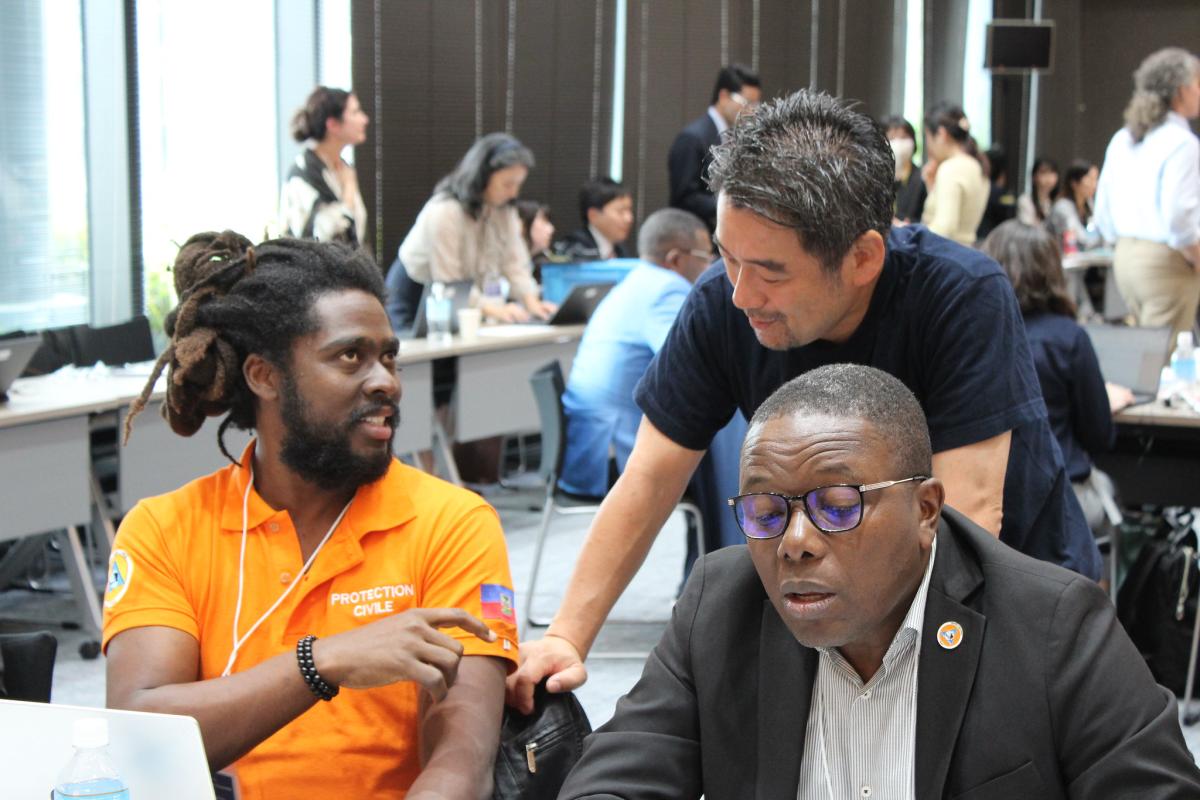
Facing continuous earthquake and tsunami risk, Japan, through Tokyo University’s Disaster Management Training Center (DMTC), has defined a set of key tasks for effective emergency preparedness and response in the face of disaster. At the Learning World Bank and GFDRR Academy for Emergency Preparedness and Response (EP&R) held in Tokyo and Sendai, Japan from April 20 to 24, 2026, over 40 representatives from 15 countries considered the tasks during a tabletop simulation, with support from Associate Professor Muneyoshi Numada, DMTC. Divided into groups representing government and community functions, from first responders to finance ministry, they then simulated how their country would take on the defined tasks. Groups were asked to think about how they should react each time the disaster simulation event threw new challenges like power cuts, road closures, or staffing limitations.
Emergency plans are only as strong as their ability to work under pressure. That was the central lesson of a multi-hazard simulation exercise held during the World Bank and GFDRR Learning Academy on Emergency Preparedness and Response in Tokyo and Sendai, Japan, from April 20-24, 2026.
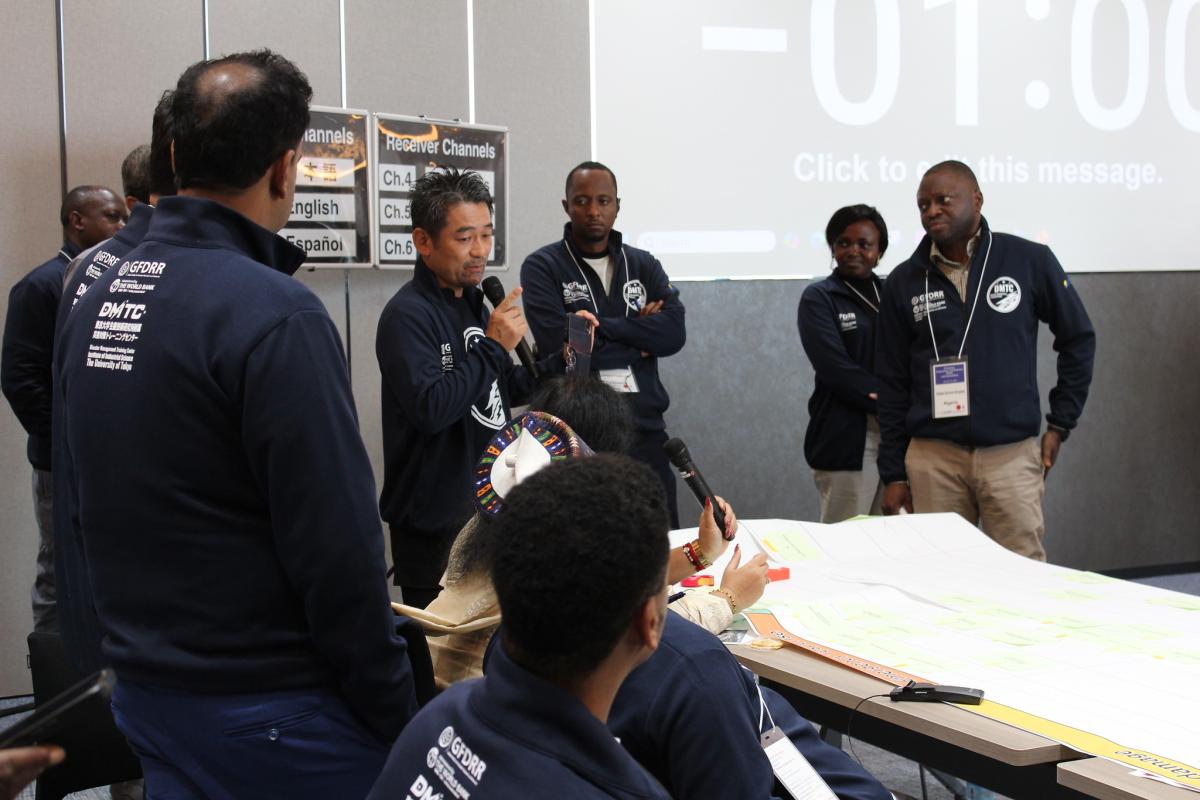
Participants discussing with Associate Professor Numada on their chosen option to respond to a particular situation
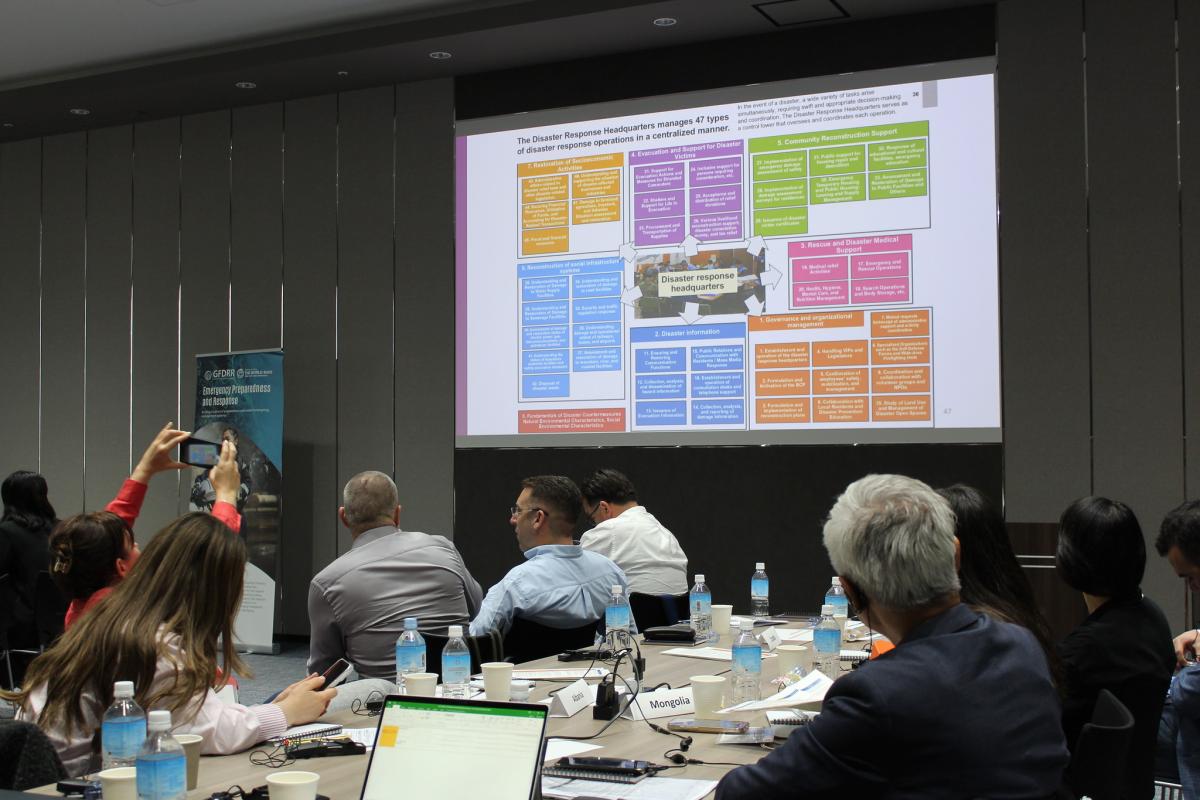
Over the course of the Academy, more than 40 disaster risk management practitioners from 14 countries took part in 47 emergency response tasks, testing how institutions would respond as disaster scenarios evolved. Working in groups that represented different government and community functions, from first responders to finance ministries, participants had to make decisions as new challenges emerged, including power cuts, road closures, staffing constraints, and competing demands for coordination.
The exercise drew on a framework developed by the University of Tokyo’s Disaster Management Training Center (DMTC), with support from Associate Professor Muneyoshi Numada, DMTC. The framework sets out key emergency and response tasks across eight operational areas, helping countries map who is responsible for what before, during, and after a disaster.
This matters because when a crisis unfolds, decisions must be taken rapidly. Even well-designed systems can struggle when roles are unclear, responsibilities overlap, or critical functions have not been tested in practice.
The DMTC framework provides a clear mapping of responsibilities, from governance and communication to evacuation, rescue, and recovery, ensuring that each function is anchored within institutional mandates. The framework underscores a fundamental principle: effective emergency preparedness and response depend on many actors - government institutions, local authorities, the private sector, and communities - working within a system where roles are clearly defined and understood.
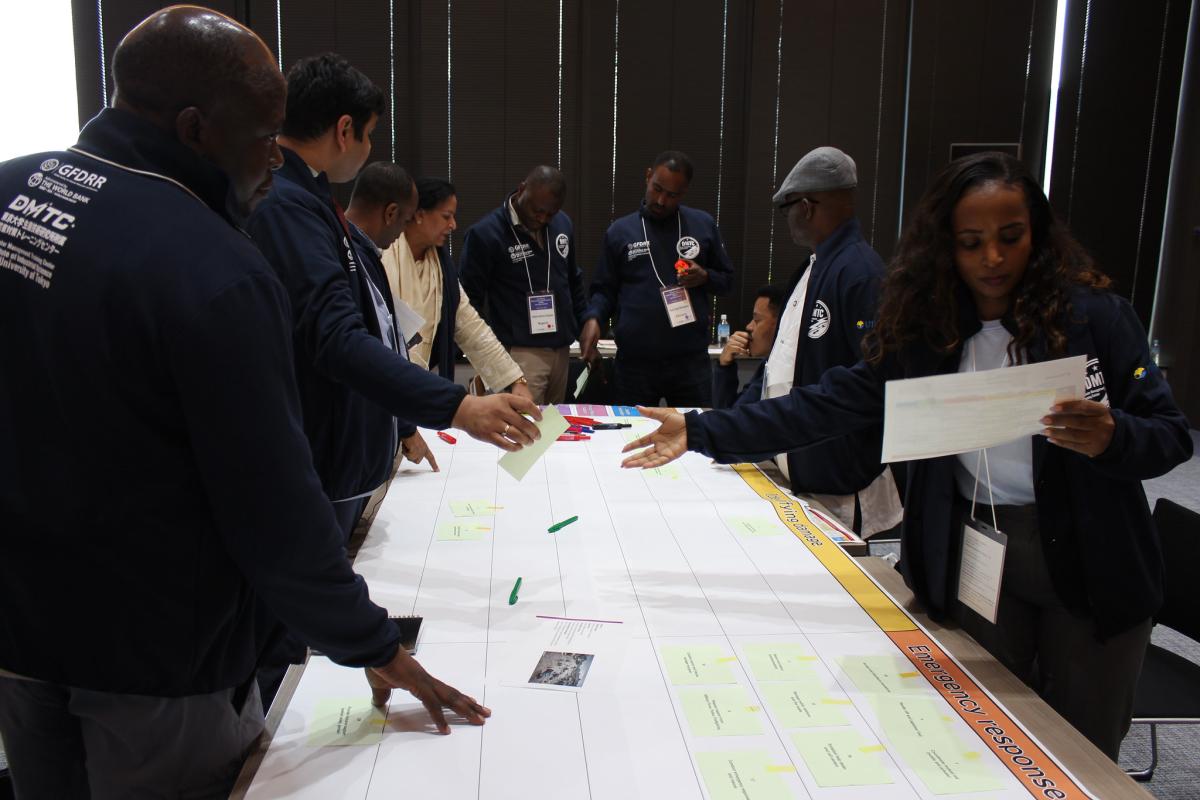
The multi-hazard simulations brought this principle to life. Participants engaged in different hazard scenarios that replicated the complexity and pressure of real-world crises. They were tasked with applying the framework to their emergency contexts, mapping institutional responsibilities, identifying gaps, and assessing whether their systems would hold under operational stress.
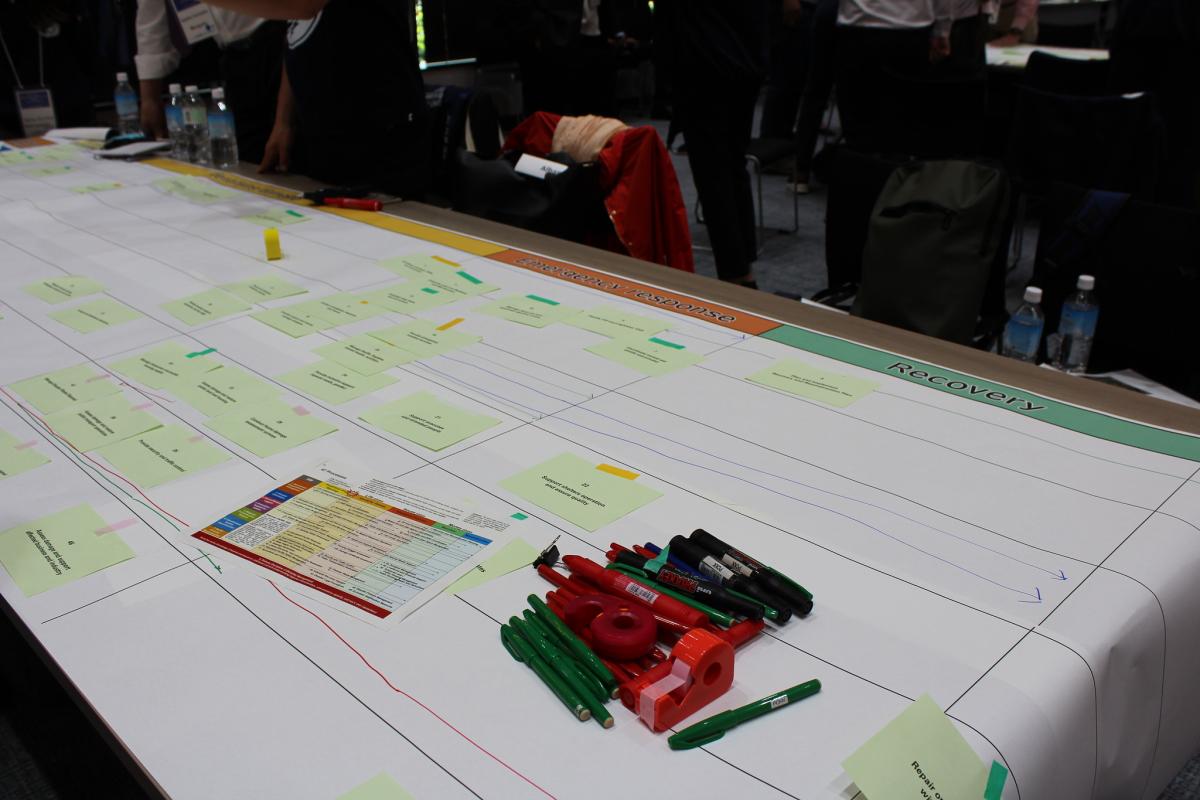
The exercise quickly exposed gaps that might not have been so evident in planning processes. In some cases, responsibilities for shelter management, disaster waste management, damage assessment, and support for vulnerable populations were unclear, overlapping, or insufficiently assigned.
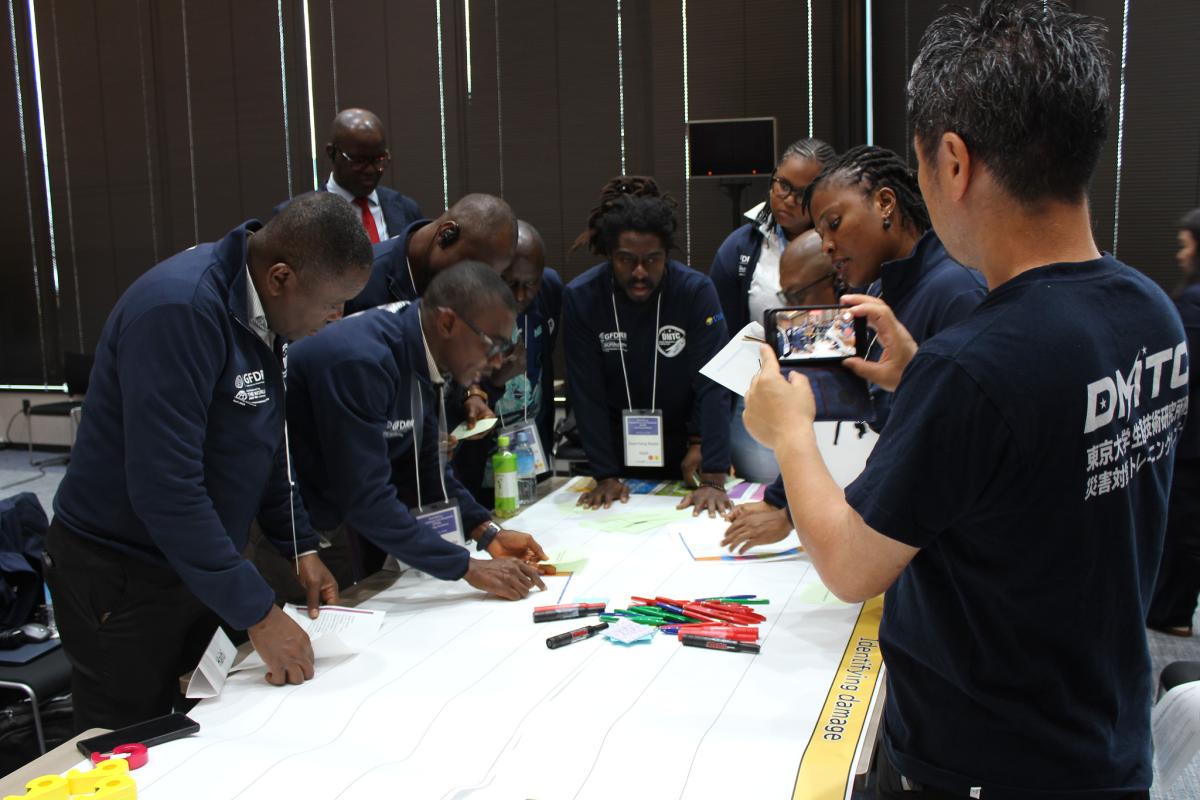
The exercise also revealed how systems behave under pressure. Teams had to make decisions with incomplete information, coordinate across multiple actors, and respond to rapidly evolving scenarios. This created a highly realistic environment where bottlenecks in decision-making, institutional friction, and coordination challenges became immediately apparent.
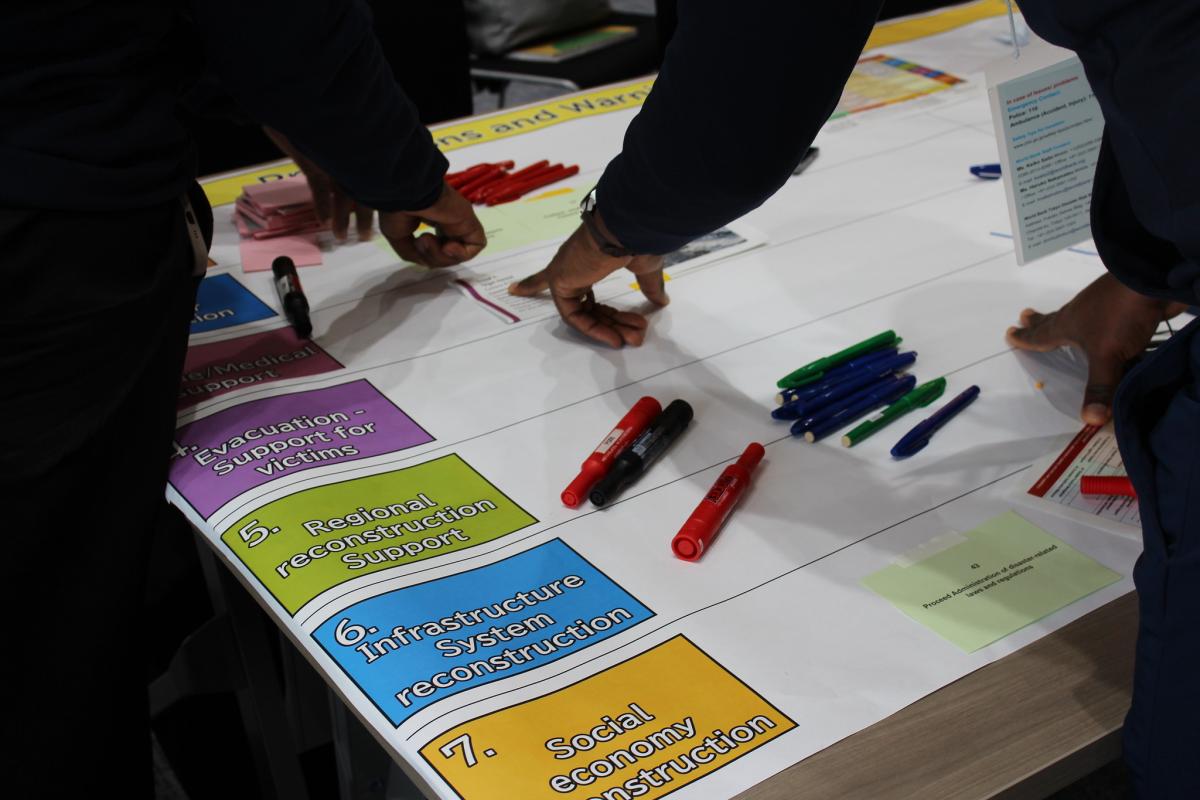
Teams also had to make decisions with incomplete information, coordinate across multiple actors, and respond to rapidly evolving scenarios. This created a highly realistic environment where bottlenecks in decision-making, institutional friction, and coordination challenges became immediately apparent.
The discussions that followed were candid and practical. Participants reflected on the importance of clarifying mandates, strengthening coordination mechanisms, and ensuring that legal and operational frameworks are not only established but functional in practice.
Across countries and contexts, one conclusion stood out: preparedness cannot be assumed, it must be tested.
This is at the core of the GFDRR’s Emergency Preparedness and Response work. Simulation-based engagements help task teams and governments move beyond plans on paper to systems that can perform under pressure. By stress-testing roles, coordination arrangements, and decision-making processes before a crisis occurs, simulations help countries identify critical gaps before a crisis occurs.
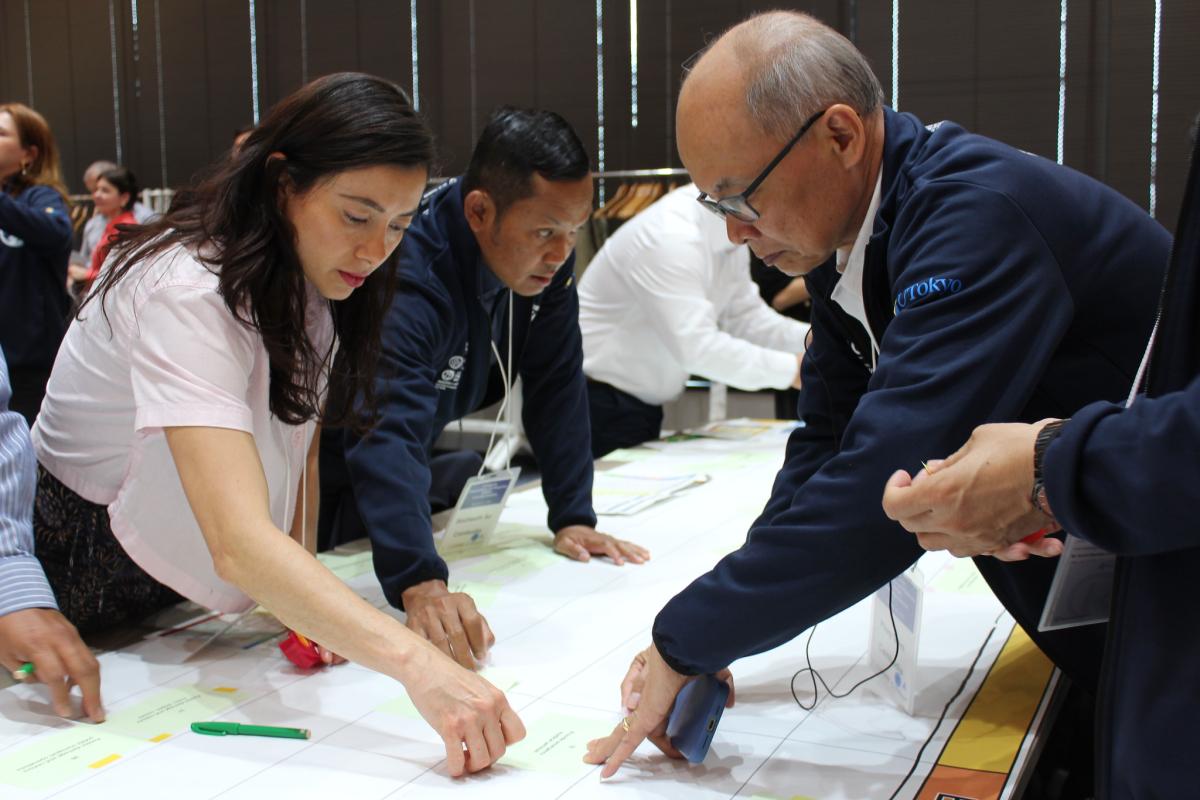
By the end of the session, participants had gained a practical methodology of 47 emergency response tasks to assess their own systems and a clearer understanding of what operational readiness requires.The lesson is clear: the effectiveness of response is determined long before a crisis begins. Preparedness is not only about having plans, but also about ensuring those plans are operational, understood, and ready to be activated. Strengthening emergency preparedness today requires systems that are not only designed, but tested, coordinated, and ready to perform when it matters most.